Citizens are critical of the City Recommendations for a Police Civilian Review Board in 1996

Editor’s Note: In the midst of ongoing Police and Community relations today, it is important to note that there have been numerous reports and recommendations on police abuse and community relations. The report referred to in this article from 1996 is one, with another coming in 2005. It is interesting to see how the recommendations don’t change much, which should tell us something about police and community relations. This article is re-posted from a May/June 1995 issue of the FUNdamentalist.Screen Shot 2016-03-28 at 12.22.58 AM

Since our last issue much has happened in Grand Rapids surrounding the issue of public allegations of police abuse. Because of the numerous examples and testimonies from citizens in the Grand Rapids area the City Commission formed a committee to investigate these allegations and put forth some recommendations. In March, this committee produced a 5 page report that came up with 10 fundamental policy recommendations.

As I read the report the majority of it focuses on changing some of the procedures in the complaint process, especially with Internal Affairs and the issue of racism and race “sensitivity.” Even though the commission’s investigation was prompted by the issue of police abuse and not race, the report puts too much emphasis on race . I counted the references to police abuse/misconduct in the report and found it mentioned just 3 times. In regards to the issue of race or racism, I found 10 references. Even though the majority of complaints were brought forth by the African American community, many of the spokespersons were not happy with the emphasis on race.

Paul Mayhue said of the report’s focus on race, “This seems to perpetuate the situation where it seems like a race problem. We want to let you know we are not talking about a race problem. We’re talking about police officers coming into communities and using excessive force on people.  We’re talking about Black cops, White cops and cops that are unscrupulous in general. It (the report) makes people in the White community say that the African Americans are coming to the Commission again and asking for special favors, quotas, affirmative action and all that stuff. We are not asking for special favors. We want the law of the land enforced.

Other concerns and objections to the report recommendations had to do with the proposed make up of a civilian review board. The report proposes a 3 level process on how to deal with complaints and allegations of police abuse. First, Internal Affairs would conduct its own investigation. This would include the participation of someone from the City Attorney’s office. Second, the City’s Labor relations Department would look at the case and confirm, modify or make changes to the recommendations of Internal Affairs. Lastly, a civilian review board (made up of 3 members) would review the findings and make their own conclusions from the other 2 groups findings. The civilian review board would not have the opportunity to engage in separate investigations or the interviewing of witnesses. They also would not have access to records, except at a low level. Most dis-heartening to those who came to the March Commission meeting was the assertion that the “Chief of Police or his designee would continue to administer discipline.”

People spoke clearly and passionately at both the March and an April 9 meeting held at Ottawa Hills High School about these issues. Most people felt that there should be 6 or 7 members from the community that would serve on a civilian review board. Two representatives from each ward and maybe one member of the City Commission. People expressed the importance that these 7 people should be representative of racial, ethnic, gender and class groupings. Many also felt strongly about not giving the final say to the Police Chief or the City Manager, especially since these positions are not elected positions, thus making it more difficult for citizens to remove them from office if dissatisfied with their performance.StopPoliceBrutality

At the April 9 meeting citizens also outlined some other concerns. They called for an end to public searches, especially body cavity searches, that they felt were humiliating and degrading. One person said, “how would you feel if your mother or your sister or your grandmother was subjected to a body cavity search in broad daylight?” Some citizens were also asking for public access to records so residents would know when police officers were disciplined for misconduct.

Much of this analysis is absent from the Grand Rapids Press, which chose to give readers simple overviews that framed the issue in a battle between opposing forces. As mentioned in the last issue of this paper, the stories and testimonies of Black, White and Latino members of the community were not reflected nor recounted in the Press articles by Kelly Root. The City Commissioners, Mayor, City Manager and the Police Chief were all given space to respond to citizen concerns. Citizens, however, were given little space and their comments are usually not polite. This is certainly understandable, but if one read the article without understanding what precipitated the rage expressed in the testimony, it would be easy to dismiss these people as hate mongers who just like to use anti-establishment rhetoric or who want to blame everything on White people.

The only person who was quoted and was in favor of the civilian review board is Paul Mayhue. It might be that because Mayhue is a County Commissioner that he is given the space in the article or that the organized body that is pushing the issue has made Mayhue their spokesperson. If it is the later, this is not sufficient cause for the Press reporter to not seek out other input and ideas from the community. There were over 20 people who spoke at the last public hearing on this matter, only 5 are given voice in the Press article on April 10.

Of the 5 that are cited, 2 of those are primarily an exchange between a police officer who was opposed to a civilian review board and a member of the West Michigan March Delegation. Both accompanying photos are of those 2 people that again re-enforces this oppositional perspective. This article is even headlined, “Officer speaks against civilian review.” I found this interesting and at the same time disgusting. What if all the people who spoke at this hearing were police officers who were in favor of keeping things the way they are now and only one concerned citizen got up to voice a dissenting opinion? Do you think the Press would have given them nearly a third of the article or entitled the headline after their concerns? Not likely. Yet, the officer got significant print space as well as commentary from the reporter. Most importantly, the Press article of April 10 did not mention the numerous concerns and feedback that was shared with regard to the issue of a civilian review board, which was the whole reason the public hearing was held for in the first place. The Press, it would seem, wold rather distract readers from the issues at hand and make you think the whole thing was about petty bickering by disgruntled inner city folk.

Clearly one cannot rely on local corporate media reporting in order to get a more accurate picture of what is going on. I suggest that if people want more information that they need to contact the city directly if they want a copy of the recommendations drawn up by Commissioners Heartwell, Williams and Mayor Logie. I am not aware of any other hearing on this matter nor when the commission will vote on whether or not to adopt the recommendations as are or an amended version. The West Michigan March Delegation is planning a petition campaign that would put this matter on the ballot in the fall. They need 14,000 signatures for that to happen.

Editor’s Note: The West Michigan March Delegation did not get enough signatures to put it on the ballot in 1996, but the City of Grand Rapids did create a Grand Rapids Police Civilian Appeal Board. However, the Civilian Appeals Board can only make recommendations and has no real power to challenge the decisions made by the Internal Affairs section of the GRPD.

Posted in Civil Rights/Freedom Movement, Neighborhood organizing | Tagged , , | Leave a comment

Grand Rapids People’s History Project gets award for contributing to local history

I am grateful to the Kutsche Office of Local History for this award. I also would like to thank friends and family who continue to support the efforts and energy I put towards the Grand Rapids People’s History Project.grphp-still

However, what I would really like to say is that what is most important about this award is that it is not only a recognition, but an elevation, indeed an affirmation of the people who have been part of the social movements throughout the history of Grand Rapids.

For me this award gives voice to the thousands of people who have resisted, fought, struggled and took risks against injustice and systems of oppression. Indigenous people who resisted and continue to resist Settler Colonialism; working class people who truly built this community and have resisted the capitalist class that practices a politics of disposability when it comes to workers; African Americans who have fought against White Supremacy In Grand Rapids or as Todd Robinson insightfully names it, Managerial Racism; the women’s suffrage movement in Grand Rapids; the various iterations of the feminist movement that would not accept the repressive forms of patriarchy and spiritual violence that have sought to silence them; the South African Anti-Apartheid Movement, which got the City of Grand Rapids to divest from South African in the early 1980s; the Lesbian, gay, bisexual, transgender and queer movement which got the city of Grand Rapids to include sexual orientation in its anti-discrimination ordinance in 1994, making this community the 10th city in the country to pass such an ordinance; the Central American Solidarity Movement, that not only educated thousands locally on the brutal US policies of the 1980s, but saw over 100 people from Grand Rapids actually go to countries like El Salvador, Guatemala and Nicaragua to stand in solidarity against its own countries policies; the Anti-Vietnam War Movement, the Independent media movement, the Immigrant Rights Movement, the Disability Rights Movement, the Animal Rights Movement and so many other movements that have come before us in Grand Rapids, movements that have risked so much, movements that have given us so much.

It is for these people and these movements that I accept this award. These people and these movements are generally not the kind of history we are taught. Indeed, these people and these movements are not recognized in the same way as those with power, both economic and political power, like the people who have their names on the buildings around this campus and throughout Grand Rapids.

And this is exactly the reason why I do this work and why we need to shine the light on the rich history of social movements in Grand Rapids.

Social theorist and writer Henry Giroux says in his book, The Violence of Organized Forgetting, “There is a need for social movements that invoke stories as a form of public memory, stories that have the potential to unsettle common sense, challenge the commonplace, and move communities to invest in their own sense of civic and collective agency.”

What the Grand Rapids People’s History Project tries to do is invoke stories as a form of public memory. To not do so what be to give into the violence of organized forgetting.

The Ejercito Zapatista de Liberacio Nacional, the insurgent liberation movement in southern Mexico says, “estamos en una guerra en contra el olvido.” We are in a war against forgetting. therefore, we can ill afford to forget, because if we do,  we know what narratives will be told

Posted in Uncategorized | Tagged , | Leave a comment

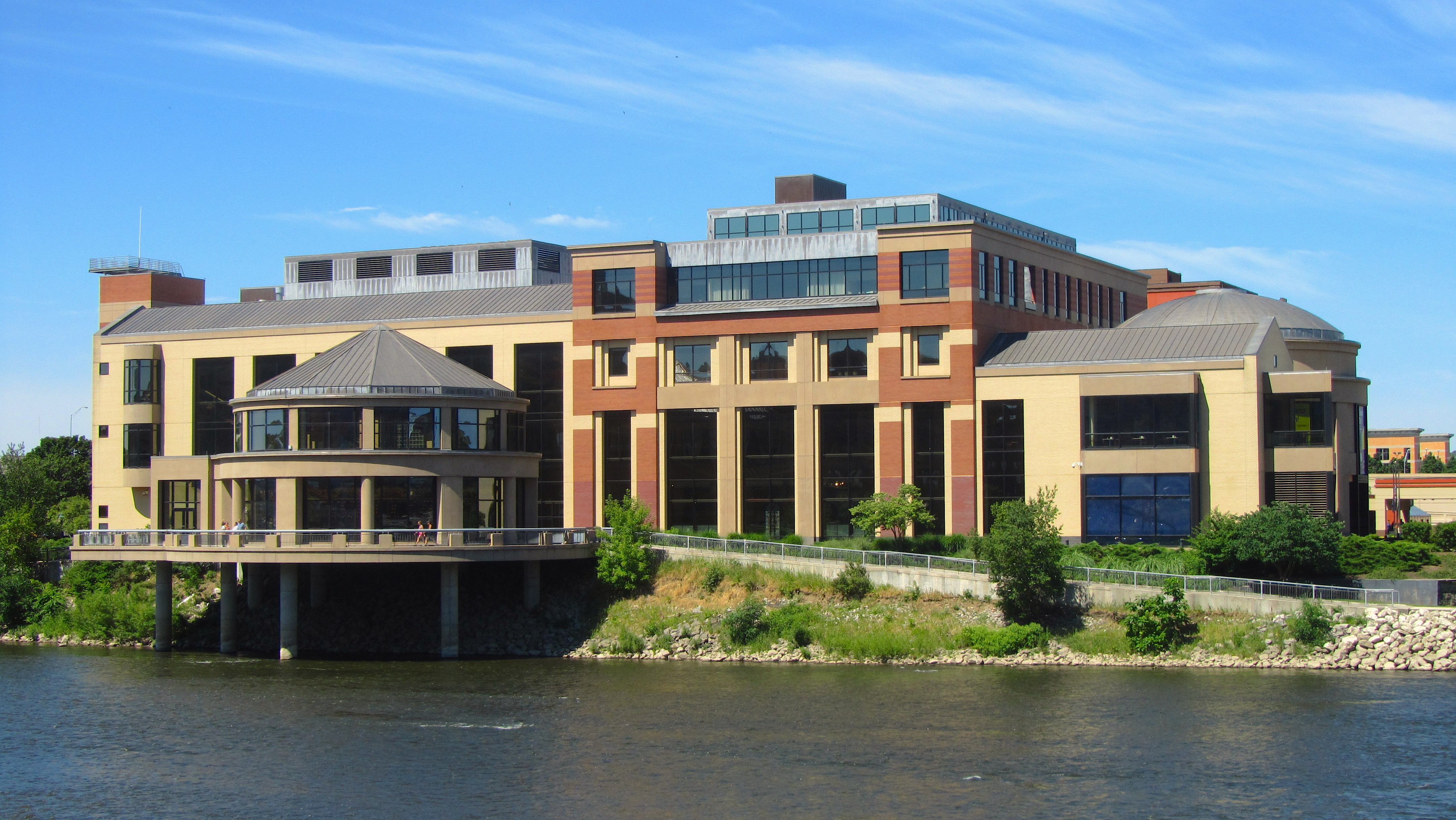
When the Public Museum became the Van Andel Museum

his article is reprinted from a January/February 1995 issue of the independent Grand Rapids newspaper, The FUNdamentalist. It is based on a flyer that was handed out during the opening of the Van Andel Public Museum on November 19, 1994.

The Van Andel Public Museum, opening today, replaces the Public Museum of Grand Rapids, originally founded in 1854, and located in the same building on Jefferson Avenue since 1940. Since at least 25 years ago some people have pushed for construction of this new building, a push that accelerated in the 1980s, and culminated in today’s opening ceremonies.Grand_Rapids_Public_Museum

During the same period, numerous groups of and representing the poorest people in the Grand Rapids area have sought better housing, mass transportation and decent work that would enable them to be self-supporting and more fully a part of the community. In the decade between the 1980 and 1990 census, during which the population in grand Rapids grew at a much faster rate than in any other center city in Michigan, unemployment increased from 6.7% to 7.4%, families in poverty increased from 10% to 13%, home ownership decreased from 63% to 60%, occupied housing units without a phone increased from 5.5% to 6.6%, workers taking public transit declined from 4.4% to 3.5% as funding and service were slashed, while at a time of rising car ownership nationally, the percentage of households in Grand Rapids with no car remained virtually the same, slightly more than one out of seven.

Since the last census many of the poor in Grand Rapids can attest that things are getting worse. Sharply increasing violence among young people is only the most visible sign of this continued deterioration.

Also, during this period, numerous extremely poor people in Third World countries have struggled desperately to throw off brutal USA-backed repression and to gain a fairer share of the earth’s resources. The USA, through unfair trade and other practices backed by military might, has taken much more than its share of those resources, making possible such projects as this new $39 million museum, and making certain that most people in Third World countries will continue to suffer terrible abuse and poverty.

Most of the $39 million came from public funds. $12 million in private funds was raised by a committee chaired by Jay Van Andel. The committee set aside about 4% of that to be raised in a so-called “grassroots” campaign, with donations of $3,000 or less. Casey Wondergem, a top Amway person and chair of the fund drive’s executive committee, used this ploy to claim, “It’s a very democratic campaign. It’s not elitist.”

When it was brought to the attention of City leaders that the site of the new museum is on a flood plain and that it could be inundated at virtually any time, they brushed that aside. And several years ago they used City resources to push for a yes vote on a cultural consolidation package that would have included public money for the museum’s construction. A threat of legal action forced them to stop doing so. The proposal was overwhelmingly voted down, by nearly a 3 to 1 margin. But it didn’t matter, the area’s democratic leadership was to find other ways.

One of those ways was pressing state representatives for money. Due to intensive lobbying, they succeeded, despite budget cuts elsewhere.For instance, museum funding (and funding for DeVos Hall) agreed to in 1990 “were made possible in large part by an agreement to cut funding for the employment program, the Youth Corps, from $24 million to $18 million.

The area’s monopoly corporate newspaper, The Grand Rapids Press, helped. The corporate organ, owned by two multi-billionaire brothers who would make fit company for Jay Van Andel, informed the community how important it is to raise taxes “toward meeting some critical community needs, starting with a new Grand Rapids Museum.” Press editors apparently forgot about a rapidly rising murder rate, homelessness, an extremely high rate of sexual assaults and a host of other serious problems right in its back yard.

What if the use of the $39 million had been determined not by a clique dominated by the area’s richest people, but by a coalition representing both the poorest people in the city and oppressed in the Third World? Assuming it was divided half and half, here are two examples of what might have been done.

In Grand Rapids there are 5000-plus very low income families, most with less than $5000 a year income, who pay excessive rent, a total of $19.5 million at reasonable mortgage rates, would be sufficient supplement to enable all of them to purchase their own homes, assuming each family obtains a home at the median value (for Grand Rapids) of about $60,000. Once these homes were paid off, these families would be in a much better position to permanently escape poverty.

As for the people in the Third World, whose grossly exploited labor supports our profligate consumption, millions die yearly due to lack of adequate health care. According to World Bank estimates, $19.5 million worth of basic public health services would save over $3000 lives.

There is another way in which this museum serves the rich rather than the poor, despite Jay Van Andel’s claim that “the museum will serve everyone.” Many of us could ill afford the admission charge at the old of $2.50. Doubling that charge prior to opening this building has made it abundantly clear whom the museum is designed to “serve.”

Who Are Jay & Betty Van Andel?Screen Shot 2016-03-21 at 2.30.35 AM

The Grand Rapids City Commission gave the museum its new name because Jay and Betty Van Andel gave $3 million towards its construction and later gave an additional $3 million to its endowment. That $6 million total is little more than one-tenth of one percent of their total $4.5 billion wealth (recently estimated).

Betty Van Andel, as far as most Grand Rapidians know (or probably care), is Jay’s wife. Period.

Jay Van Andel is a founder and chair of the board of Amway Corp. Amway is a huge multi-national corporation that, according to ex-distributor Steven Butterfield (writing in a 1985 book, Amway: The Cult of Free Enterprise), has systematically resisted efforts at unionization of its salaried employees and has set up a structure for most of its workforce that assure high profits for a select 1-2% while the other 98-99% “are not, nor can they ever be, at a level where they make enough to replace the income of a single wage-earner in the family.” Amway has falsely advertised this scheme as providing more opportunity than it really does and thus draws in many unsuspecting people. It operates much like chain letters, which, for good reason, are illegal. Amway’s clout has apparently been sufficient to prevent most legal sanctions against its version of that old scam, though the Federal Trade Commission found the company guilty of price fixing in 1979 and ordered it to stop misrepresenting potential earnings to new salespeople.

Van Andel’s politics include support of various anti-labor organizations and opposition to the Comprehensive Employment and Training Act (Amway thrives on the desperation of recession and unemployment), the Consumer Protection Agency and various other entities and policies that benefit the public at large.

This reactionary approach reaches the pathological at times, as evidenced by a $300,000 gift for construction of a facility to house the “Creation Research Society,” which claims, in Jay’s words, to use, “modern scientific research to validate the creation story as presented in the bible.”

Van Andel was one of the four top Amway people who denied guilt at first, then in the face of the evidence pled guilty in the early 1980s to criminal charges of having defrauded the Canadian government of some $148 million starting in the mid 1960s. A tipster in the case was threatened and at one point reportedly beaten. Amway paid a $25 million fine and later worked out a deal in which it paid only $38 million to settle the civil case. Thus, this fraud, the largest in the history of Canada, produced an estimated net revenue to Amway of $85 million. Jay, who as board chairperson oversaw the operations that produced that fraud, never served a single day in jail.

Jay, along with Amway partner Rich DeVos, has used the company’s clout to help elect reactionary politicians, Ronald Reagan for instance, to office. At times, government has directly supported these efforts. In addition, Amway has been able to write off many of its rallies, in which such politicians have been supported, as tax-deductible business expenses. These politicians have, in turn, supported the gross materialism that is one of Amway’s hallmarks.

Amway, which aggressively touts itself as a green company, is known in at least one case to have been forced to pay to help clean up one of the nation’s worst toxic waste dumps, to which it contributed. Given its mission to sell as many (expensive and mostly unnecessary) goods around the world as possible, this must be considered no more than the tip of an iceberg.

Amway’s selfishness has taken precedence over some of its supposed friends at times. For instance, Amway repeatedly donated food to Nicaraguan terrorists (known as the Contras) in the 1980s. Much of that food turned out to be extremely outdated, stale, in some cases rancid or buggy. Amway claimed tax write-offs at grossly inflated prices for this supposed selfless generosity.

If the total wealth that Jay and his partner Rich have amassed were put in an account that paid 7% interest, it would be enough to bring every household in Grand Rapids out of poverty….forever. Or if it were distributed to a million of the poorest families in nations exploited by policies supported by these two, it could literally save the lives of over a million innocent children who would otherwise die of starvation or disease. Think of the terrible anguish suffered by so many parents that could be averted by such a redistribution of this stolen wealth!

Posted in Anti-Capitalism/Labor, Indy Media | Tagged , , | Leave a comment

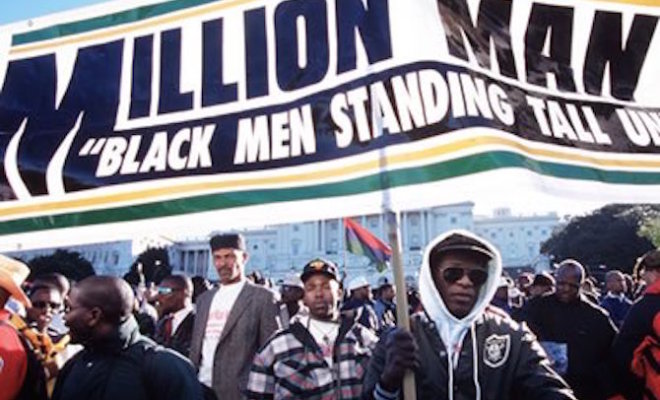
Grand Rapids participates in the 1995 Million Man March

The first Million Man March took place in October of 1995. Several people from Grand Rapids attended that march. This interview, reposted from the Indy newspaper The FUNdamentalist, was conducted with one of the Grand Rapids organizers, Kashaka Kikelomo.

Jeff – Can you start off by saying something about what the Million Man March is all about?1995_million_man_march-660x400

Kashaka – I’ll do the best I can considering I am not an official spokesperson for the march or for Minister Louis Farrakan or anybody else involved. For me, based on everything I have read on it, what the most important aspects of the march are atonement and reconciliation. That strikes me as being of particular importance, as a Black man, because I think there is a need to reconcile, to reconcile with one another. It’s about Black men getting past the whole ingrained concept of self-hate and moving on to self-love. We have to work together in order to move forward. With a day of atonement, we atone for our lack of leadership, lack of direction, lack of hard work to lift up the Black community and atoning to Black women for the burden that they carry unnecessarily, because we have not done what was necessary as Black males.

Not just myself and my generation, but throughout the 400 years in America we have seen countless examples of Black women who have stood in the face of adversity and taken on the challenges. Not to belittle Black men, because we have fought the good fight, but the direction, the struggle and the way we have struggled has not been the way we should have.

This whole day will be about atonement for what we have done and haven’t done. Hopefully we can begin anew and create something different and whole. So this march is for me an opportunity to start anew with brothers in Grand Rapids and myself and begin to look at the problems differently and attack the problems differently.

Jeff – What kind of response have you had from Black men in Grand Rapids, as far as interest in participating in the march?

Kashaka – Interest has been high. I mean people have been interested, but they have not carried that to the next level. We have found people who are interested, but say they have to work that day or have another commitment. Perhaps my judgement is harsh, but if you have an interest in this and believe in it, it is something that you should make a commitment to. However, there is a solid group of us who are committing to it and will be there. We also found that a lot of brothers didn’t even know about it. They didn’t have  the information about the march soon enough to make a decision to go.

Jeff – Sound it sounds like it is not so much a gathering or a demonstration against White Supremacy as it is a day of Black self-empowerment?logo

Kashaka – Actually, the whole idea of Black self-empowerment is a demonstration against White Supremacy. That is at the core of what we are dealing with. Yes, the march is attacking that, but we realize that until we empower ourselves we’ll forever be under the thumb of White Supremacist thought and action.

Jeff – Can you elaborate a bit more about what you said earlier in regards to Black men atoning for what they have done to Black women. Some people have raised concerns about this issues, since Black women aren’t invited to the march.

Kashaka – I would first say to those who question why Black men are coming together to march for any purpose, I would say to them, question us if you question the purpose and reason for the Promise Keepers. Then you can question perhaps our reason for coming together, but until you do that don’t question what we are doing. I see the racism, the unfairness involved in that question itself. Promise Keepers can come together and meet, but when Black men come together and meet I think it is frightening to America, both Black and White America. People seem to have a need to question this as a means to destroy it. The reason we are coming together is because there are things that are particular to us. As men, we have not done as much as we could have and should have to address the issues that concern Black people and that is not to exclude Black women. To further this we have to be realistic. I am cognizant of the fact that this is a patriarchal society. Now, I have to deal with the world as it is not as it should be. As Black men we have been and are enemies of White men, because of how this system is structured, this White Supremacist system.

Those who are in control, largely White men, are enemies to Black men who want to control their own destinies. Because if Black men controlled their own destiny then White men cannot use Black men to suit their needs and for their gains. We have to, as men, develop and design particular strategies that are realistic and that address that very real fact that this is a patriarchal society. There are pressures placed upon us that we and only we can come together to solve. Now there are Black women who believe in what we are doing, support what we are doing and are involved in the organizing of the event. Black women are not left out, because we are asking them to not go to work the day of the march, to stay home the day of the march, to keep children home the day of the march.

As well, we are asking Black me  to stay home the day of the march, those who cannot attend. We want people to see this as a holy day, to pray, to study, to ask for strength and understanding. So it doesn’t exclude Black women, but we are dealing with a reality that this is a patriarchal society and we as men have to address particular concerns. So, our atonement is not is not so much what we have done to women, but what haven’t we done. I mean we are facing the fact that 60% of the heads of Black families are female. That should not happen no matter what system we live under. It is out responsibility to be men, to find a way to lead productive lives, to care for our children, to be mates to the women, and so we, to a large degree, have not done that. That is the responsibility we have to take.

Jeff – Brining it back on a more local level, what would you say are some of the more pressing issues that face the Black community in Grand Rapids?

Kashaka – One of the more pressing issues that face the Black community is that Black folks have been a part of this paternalistic system so long that we don’t even recognize what the issues are. We don’t recognize that we are faced with racism, stifling racism, with economic oppression, and we don’t we just don’t recognize that. We are also fearful of what might happen to us if we speak out against it. We go along to get along, because we are afraid of the repercussions. So when we look at drugs in the Black community, it is not a moral issues, it is an economic issue at the core. If Black men, young Black men had opportunities for employment, had proper education, I doubt very seriously that they would be out selling drugs. We are not born criminals, this system makes criminals.

Another pressing issue is the lack of education. Our kids go to school to learn how to be consumers. They learn to be secondary citizens. We allow this to happen in our school system. We should teach our children not to be consumers, but producers. We should teach our children the true history of Africans, not only in America, but in the world. We should instill in our young people the understanding that they come from a great legacy of achievers and have an even greater legacy yet to be fulfilled. It goes back to the system that has been designed to take proud strong Africans to what you see in the making today, a people who are not aware of who they are, and in fact have been taught to hate themselves and each other.

It has worked extremely well. We have not designed anything to counteract that as a group. We don’t have a local policy. We allow the problems to be defined as drugs, teenage pregnancy and alcoholism. What happens then is that we are defined as the problem, instead of attacking the root problem, which is White Supremacy. A system that allows one people to control the world’s resources and dictate their thought, culture and desires on the rest of the world.screen-shot-2016-01-25-at-4-21-45-am

Jeff – Some people in Grand Rapids, in fact many people I believe, would say that Grand Rapids really isn’t a very racist city. How do you respond to that?

Kashaka – I would say there is really no way for you to understand what Grand Rapids does to people of color, unless you were somehow able to live in my skin, even for just a short while. Sure, Grand Rapids has been a place that if you want food, there is a place to eat; if you need clothes, there is a place to go. It is very responsible in that way. I think it is the Dutch/Christian ethic. However, on the other hand the approach is very paternalistic; that whole notion of teaching a person to fish and you feed them for a lifetime, that doesn’t exist here in reality. In that sense it is very racist, because very often we are looked as people who cannot do for self. A lot of that giving stems from this attitude. To me that is racist itself. That whole idea and attitude that we are somehow less capable. I have been living and working in this city for 10 years and yet I still have to deal with the perception that I am somehow not as intelligent as others. Grand Rapids has some particular elements of racism that manifest themselves in numerous ways, particularly in the quality of life, or lack of it, that people live.

Jeff – By way of conclusion, what would you suggest as strategies to overcome some of these issues and are there things in the works that are doing that in Grand Rapids?

Kashaka – I think there are things in the works because there is the beginning of a new attitude here in the Black community. One of the positive signs is that we see more Black owned businesses. We have to build up the economy in the Black community and we cannot rely on anybody else to do it. There is also a movement to start an Afrocentric school and I think that is a necessity. I think we need to begin to educate our children to think of themselves differently. That is a movement of young people who are committed to the struggle, who are becoming more vocal and organized. Given some of those factors we are going to see a difference. I am hopeful.

There is one more thing I wanted to say about racism in Grand Rapids, something that is more concrete. Look at the southeast and southwest sides of Grand Rapids, where most of the Black and Hispanic communities live. Look at how people in power address and approach them. There is an inherent fear of the southeast side on the part of White citizens in Grand Rapids, for the most part. It is assumed that the southeast side is a bad side, that the schools and the neighborhoods are bad. People often say that without a second thought. They generally say this without an empirical evidence that this is in fact true. I’m not saying there are not pockets where poverty is extreme and crime is high, but that does say that because there are pockets of it here that there are not pockets of it on the other side of town. But the perception is never that.

When you look at major businesses on the southeast side you see it is almost non-existent. There is no investment in the southeast side of town. Why not? There is a willing and able labor force. What rationale can you give me that will ring true and honest? It’s racist, bottom line. We can build up the downtown, or other areas of the city. They can build up outlining areas, like Walker and Kentwood, but it is not happening on the southeast side or the southwest side, where Black and Hispanic people live. We don’t control the economics. To answer the question about racism in Grand Rapids all you have to do is open your eyes and take a good look. But let us remember that racism is the visible residue of a system that has operated for centuries and that system is designed to allow a minority of the world’s population, those of European descent, to continue to control and utilize the world’s people and resources. This is the true problem, the root cause and it must first be stopped, before there is any reconciliation among all the people’s of the world. The Million Man March gives Black men and Black women a vehicle upon which to reconcile with one another, so that we may begin to see one another as we truly are, as God created us, in his wisdom and glory, and from there we can begin to develop a strategy to uplift our lives, our community and leave our children renewed hope and promise.

Posted in Civil Rights/Freedom Movement | Tagged , , | Leave a comment

How the 1936-37 Wildcat Strike in Flint impacted Labor organizing in Grand Rapids

It is not said often enough, that when people engage in direct action, it not only can get immediate results, it can inspire others to take similar action. When people become aware of the courageous acts of others, it often creates space for people to realize their own power and organize.Flint_Sit-Down_Strike_window

One powerful example of direct action from the 20th century in Michigan, was the 1936-37 Flint Wildcat Strike. The auto industry was booming and pushing its workforce to crank out more and more vehicles in less time. The pace of production at auto plants across the state in 1936 was taking its toll on workers, that it caused the spouses of auto workers to describe their husbands as old men. One woman said, “They’re not men anymore if you know what I mean. They’re not men. My husband he’s only thirty, but to look at him you’d think he was fifty and all played out.” (The Labor Wars, by Sidney Lens)

1936 was also a year that saw a harsh summer heat wave, with a period in July at over 100 degrees for a week straight. The heat, combined with the work pace, resulted in hundreds of auto workers being hospitalized and several dead. On top of that wages in the auto industry declined from the late 1920s through 1936 and the Pinkerton’s, notorious union-busting thugs, had infiltrated many of the unions, especially the American Federation of Labor (AFL). These conditions laid the ground work for an uprising and Flint, Michigan would be the battle ground.Flint-orchestra

The United Auto Workers (UAW) was relatively young in 1936, so they had as yet succumbed to bureaucratic dynamics. Responding to oppressive working conditions, slave labor wages and a greedy industry, auto workers at a GM factory in Flint engaged in a wildcat strike, also known as a sit down strike. Instead of leaving the plant and picketing outside, workers right in the middle of production stopped working, occupied the factory and in effect took control of the building.

The wildcat strike lasted from December 30, 1936 through February 11, 1937. However, the owners of GM were not going to make it easy for the striking auto workers and local cops, anti-union thugs and national guardsmen were all used to try to squelch the labor uprising. There are dozens of accounts of physical confrontation between striking workers and those acting on behalf of the capitalists. When cops or other servants of the auto industry would attempt to enter the factory, workers would through auto parts at them from open windows above.

The sit down strike had a terrifying effect. The people of Flint rallied to support the auto workers and after 6 weeks they won numerous demands, including better wages, the right to organize, improved working conditions and the respect of people all across the country. In addition, the UAW sit down strike provided an opportunity for workers to follow the example of their fellow workers in Flint and begin to make demands of their own all across the country, even in Grand Rapids.

Still reeling from their defeat during the 1911 furniture workers strike, unions were not effectively mobilized to respond to the growing power of industrial capitalists. However, the insurgent labor organizing by the UAW and the CIO provided new inspiration and new opportunities for workers to challenge the business community in Grand Rapids.

Screen Shot 2016-03-11 at 3.45.53 AM

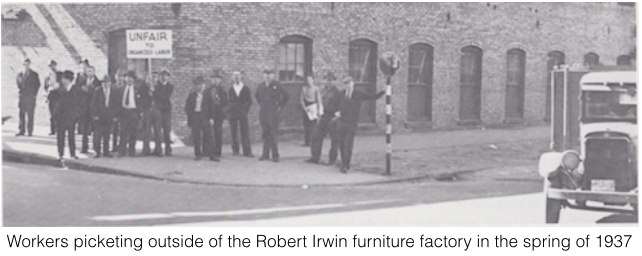
In the Spring of 1937 the UAW called for strikes at the Robert Irwin Co., the Macey Co., and Irwin Seating, which involved roughly 1,000 workers over a five week period. In September of that same year more strikes would break out at the Furniture Shops of America, John Widdicomb, Grand Rapids Chair and other furniture factories. In each of these instances the union got a closed shop contract, a check-off procedure and wages increases.Screen Shot 2016-03-10 at 11.58.59 AM

After a failed attempt to organize a union at the Kelvinator plant, the UAW tried again in 1937 and won their first contract, which included the recognition of the union and wage increases. Known as Local 206, this UAW organizing effort became a model for many of the other labor organizing efforts across the city.

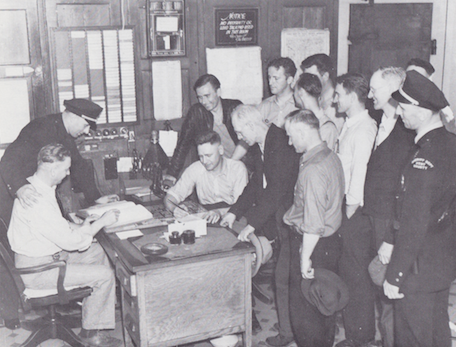
In some cases workers defied an anti-picketing injunction that the local courts imposed and many workers went to jail for brief periods in order to win labor contracts and build worker power from the ground up. In the photo above, you see striking workers being booked at the Kent County Jail in June of 1937.

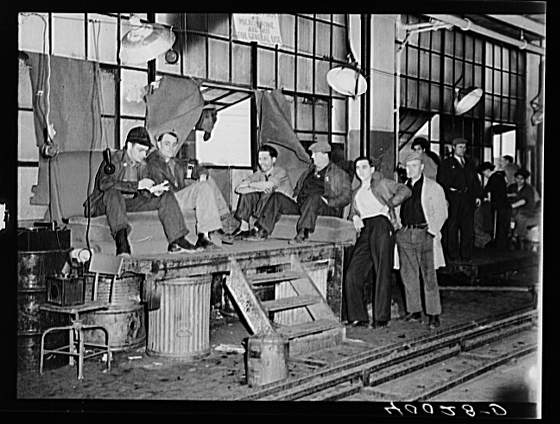
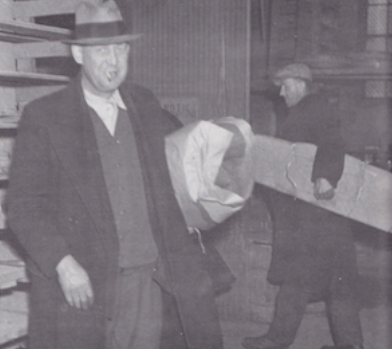
While most of the labor organizing in Grand Rapids at that time did not involve a sit down strike, it did involve other types of strikes and picketing that were effective for making gains. There was one factory occupation that lasted for three days at the Atwood Brass Works in grand Rapids. In the archival photo below, you see some workers taking their makeshift bedding after the strike was over.

Screen Shot 2016-03-11 at 3.43.06 AM

What the radical direct action efforts of the workers in Flint did was to scare the business community enough to be willing to negotiate with angry workers in Grand Rapids, for fear that a wildcat strike might break out here. When people engage in radical direct action it pushes everything to shift. Workers in Grand Rapids were able to seize the moment created by the wildcat strike in Flint and mobilize workers here to push for greater demands and to unionize several thousand workers over the next several decades, thus providing them the opportunity to rise out of poverty and to create a working class culture that can still be found in Grand Rapids today.

Photos of Grand Rapids workers come from the book, The Story of the UAW Region 1-D.

Posted in Anti-Capitalism/Labor | Tagged , , , | 5 Comments

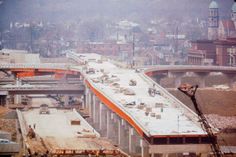
Roughly 4,000 people were displaced from highway construction through Grand Rapids: An interview with Fr. Dennis Morrow

This interview is re-posted from the Sept/Oct. 1996 issue of the FUNdamentalist, an independent newspaper that existed in Grand Rapids in the 1990s. This interview was with Fr. Dennis Morrow, a Catholic priest who has done slide shows for the Grand Rapids Historical Society on the impact that highway construction had on Grand Rapids in the 1950s and 1960s.

Jeff – Could you give us a summary of the presentation you give on the impact of highway construction through Grand Rapids?screen-shot-2015-11-23-at-4-19-37-pm

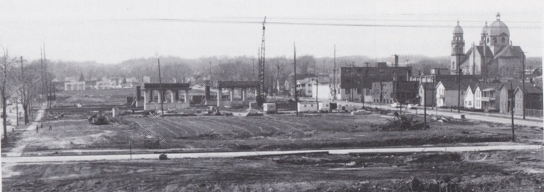
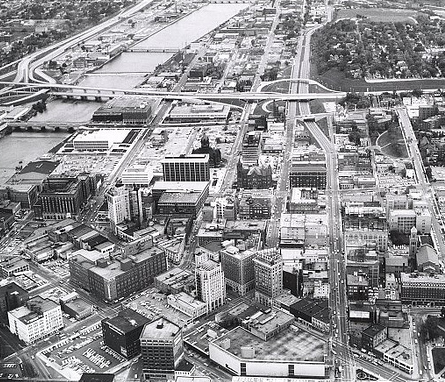
Dennis – The title of the presentation was “Lost Grand Rapids: Under the Freeway.” The idea was to display photos of buildings that have not been around for 30-35 years now, some commercial structures, some railroad affiliated buildings, but primarily residential structures that were removed with the building of the freeways. There were 70 some slides that we selected from roughly 200 that I had culled from the library’s collection. We made slides from these and put on a show. It had a commentary in it with each photo to kind of say who lived there and who built the house. That was for history buffs, because of some of the old limestone buildings along the river front, but I couldn’t resist putting in my own 2 cents at the beginning about something that I really think should be done, and fairly soon, because the people who remember the building of the freeways and the people who were displaced are little by little dying off. The people who were old when they had to move are gone. It is primarily people my age and younger who remember things. The reason I say there should be a study is that I have never seen a good sociological study of the effects of urban displacement that took place from the mid-1950’s to the mid-1960’s. A lot of people point to the unrest of the 1960’s as a reaction to all kinds of things; the slowness of desegregation and the Kennedy assassination and the subsequent assassinations of King and Robert Kennedy. But I would be very interested to see some tracking done of that time, because I think there is a correlation between people who have been displaced or a community which can experience itself to have been raped. This is really what freeways did…..physically. They literally raped cities. This was not to Eisenhower’s credit, as I understand it, with the Interstate system. Eisenhower surely saw the advantage of connecting cities, but it was not part of his plan to disrupt cities and to gut them in some cases. Grand Rapids suffered minimally in all that compared to other cities. Look at Detroit, the devastation that occurred there when the highway was built. We don’t normally call it devastation, because something was built. It was pushed through by the government and certainly you could say that some people have benefitted from it. However, if the devastation from the riots of the 60’s had been nearly as great as the devastation wrought by the freeway construction they would have called the riots an all out war. The amount of dwellings that were destroyed during the riots were infinitesimal compared to those destroyed during the freeway construction. You can look at virtually any city that where the freeway went through, the older housing stock, everything around the freeway became undesirable as a place to live. There were lies. I went to visit a lady in our parish (St. Peter & Paul) who recently moved off the 1500 block of Turner, because I wanted to find out what happened back then. My family was on Front Avenue and we lost our home to urban renewal a year after the freeway was built. We knew so many people that were uprooted and displaced. So, this lady told me that their house wasn’t being taken, but most of their neighbors had to move. This man from the State Highway Department came and told her that you are going to love this. It will be tree lined all along the road. In fact, it will seem like you are living on a boulevard. I asked her if that man bought the house next door, if it was going to be such a wonderful place to live. I don’t think anybody who lives next to or near the freeway considers that to be a really nice place to raise children. We have since seen the value of housing diminish along with other devastation. Devastation in this sense: that it made the housing undesirable in people’s minds for a family thinking about moving there and raising children. So the people who were left there were often people who could not afford to live anywhere else.

screen-shot-2015-11-24-at-8-28-14-am

Jeff – Last year I did an article on the residents who lost their homes on the westside near the highway because of the parking lot that was being put in. One person I spoke with, Tom Kroon, who still lives there, he told me that the neighborhood did not become run down in any way significant until the highway went in. I wonder with your investigation on this matter if that would be a fair assessment?

Dennis – The neighborhood was old. We lived at 8th and Front and we had neighbors of all kinds. We didn’t have rich neighbors, but there were all kinds of people. The were old people, younger couples, apartment dwellers, quite a mix, but cohesive in a way. Sure Front Avenue was a major thoroughfare in those days, but people never really assigned a value to their house. It was where we lived. So what if you lived across from the old Leonard St. market, it was no big deal. I can say for a fact that my Grandparents never wold have moved out of that house. It had no hot running water and no bath tub. They used the old laundry tub for baths. They never had any desire to put them in. So I guess I would think of a neighborhood down there on Summer and Mt. Vernon to be a great deal like the neighborhood I grew up in. There were some families that were well to do. In the slide show I did there was a photo of the old Jackoboice homestead at Mt. vernon and Allen. It was a nice old brick home. So if you recall some of those houses on Mt. Vernon and Tom’s house on Summer, some of them were really magnificent homes. Like Heritage Hill that had been over the years chopped up into apartments and things like that. That to me is a zoning problem, which done properly could have prevented some of the things from happening to those houses that did. So you have 6 or 8 units in a home that was designed for a family, you over tax the property and it gets run down and in effect it takes its toll on the people in those dwellings.

Let’s go back to the sociological displacement that I was talking about before. When I think of the wrenching of friendships and neighborhoods, of people who had lived there for a long time. My Grandfather had lived on 8th and Front since 1919, when they moved there from Illinois. His parents both died in that house and the house was eventually torn down at the end of 1961. So, for 42 years that was his home. Well, when you just come along and bat it down you deal with the same kind of anomie, in a way, with the effects of a major war. It is possible that some of the highway planners had just got back from the war and so devastation in Europe and the thought of it didn’t bother them. Things like tearing down homes, cleaning things out, tearing down buildings, but they went about it with a zeal. It was not originally the plan of the Interstate system as I understood it, but many of the urban planners saw this as an opportunity to clean out some of the undesirable areas.

Jeff – It seems to me that this situation continues with the types of things they are doing, especially in the downtown area with parking and roads and some of the new construction going on. How important is long-term planning when it comes to designing cities that are more people friendly?

Dennis – I think planning is very important, because left to ourselves we tend to take the easy way out. I have to consciously say to myself that, no I’m not going to use my car today, because I don’t have to make all kinds of stops along the way. All I have to do is go downtown and go back. If it is a cold, blustery winter day, then I can plan to take the bus. That’s personal planning, but I think that the City government can encourage people to do that. That is a legitimate role of government. Simply planning for people’s convenience is not the way to go. Look at big malls, which have a lot of space, they planned around people’s convenience. Look at the example of the City of Walker right now. They have an opportunity to plan and to say no. They already have those huge malls on Alpine Avenue. They have space in Alpine Township just north of 4 Mile where these stores have come in and torn up the orchards, paved over that green space and now they are empty, because there are too many malls already. And then they still want to do this with even more farm land…..come on! So the more that you do this in the outskirts of the city the more downtown is going to be in a frenzy of just to figure out where people are going to park. Then you get the level of bus riders like in the 1960’s, where it dropped so much that they discontinued bus service at night. Then we wonder why we have social problems on the street. People can not get to jobs unless they have a car and most are not willing to pay for a cab, because it takes up most of their salary. Another problem is that this aspect is only seen as a problem for the poor. Rich kids can always have access to a car. I mean look at Catholic Central. I think it is atrocious that Catholic Central even has a parking lot. These kids have no business taking a car to school. Why can’t they take the bus? I don’t see any reason for that at all. So, yes, planning is very important, but it needs to be drummed home to people. Sort of like what has been done with recycling. It took years but now it is fairly common. We have to do that with public transportation. People need to see that it can be an effective and efficient way of getting around.

Jeff – One other thing that comes to mind as you are talking is that people generally approach this from one angle. they say that we should build this because it will create jobs, or we should take this building down because it will free up more parking space or we need to bring people downtown. When dealing with any of these issues we need to look at it in the larger picture and see how it effects us on all levels. We need to take a more sociological approach, as you say. How does this stuff affect people emotionally, how does it help create community, create job security or safer neighborhoods. It seems to me that this type of thinking doesn’t exist in present planning for the most part.

Dennis – I think that should definitely be addressed, but there are fine lines here. It is very difficult to tell somebody what to do with their property and we really don’t want that kind of government interference. However, when people come together, like they did in Heritage Hill, good planning can happen. They had a wide range of people who got together to contribute different things and were able to accomplish some good things without significantly altering the neighborhood. So, we have some success stories, but you have to remember that in the 1950’s there were no neighborhood organizations. The press just announced the new freeway and if you lived in its path, too bad for you sucker. Now if they tried to do that today they would never would have been allowed to do that to the westside because of the historic preservation laws. There were just too many truly historic structures there that wet pretty far back. So, it was an interesting thing to do this presentation from the stand point of what we lost in terms of what buildings that were put up by the pioneers of European descent, which is just a further reflection of what was lost. When those pioneers came here in the 1850’s they cut down all the Indian mounds along the river. That too was devastating and unsettling, then look at what happened to Native people. So, I guess what I am saying is that I look at that displacement and then look at this society or this city, which is suffering in a way that they were not in the mid 50’s. This is not to say that there weren’t degrading housing conditions, there were. But even where there were, people seem to somehow respond in a more wholesome way than they do today.cc1a5b0f0d9a45e82084946e0a89764f

Jeff – What exactly was the time period that this happened, when they decided to build the highway?

Dennis – They were already talking about it as early as 1949. I should add this though, I can remember what traffic was like before the highway went in. There was just a sea of cars on Century and Ionia. So it was a legitimate question to ask if the freeway improved the quality of life. The planning in my estimation was just bad. In 1949 there was a plan that I came across in the newspaper. In the plan the route was pretty much the same up until Grandville Avenue, then it cut north right to the east end of the Fulton St. bridge and actually went over the river up north of Michigan. Then it cut back and took the railroad right of the way all the way of north. It would have saved all kinds of houses and everything else. It skirted the downtown area with the commercial development. Whether or not it would have been feasible to build such a monstrosity over the river, it probably would have ruined the river. So, ultimately they decided on the route we have and made it terrestrial. They started talking about the route in 1956 or 57 and then started buying up property.

Jeff – So when did the freeway open?Screen Shot 2016-03-04 at 12.57.55 PM

Dennis – US 131 opened in 1962 at a section at a time. It was opened just to Pearl for a couple of years. The East-West freeway opened later. It was completed only in 1964.

Jeff – If you had to make a guess, how many houses were destroyed in the construction of both highways?

Dennis – I am going to estimate about upwards of about 1,000. I read something somewhere about 4,000 people being displaced. There is a list at the library of how many demolition permits were granted in those years, but I don’t remember the figures.

Jeff – One last thing I guess is that considering the decisions that are being made now with the off-ramp that is supposedly needed for the arena traffic and the South Belt, which may free up some traffic to some degree, unless effective mass transit is not included in all this planning are we are just destined to repeat the same mistakes that you have been talking about?

Dennis – Yes. You have all kinds of traffic jams all over the city at certain times of the day and then you get on the bus and there are 7 people on the bus. I notice also that people in the cars are generally quite angry with people and swearing at each other. I think driving makes people ornery. In 1989, I spent some time in Navaho country and people just seemed to be so much more laid back. When I got back I felt like a rabbit being thrown into a swarm of killer bees. I come up next to somebody and nod and, geeze, they just look at you. So, I think that driving makes people mean. What I find enjoyable about riding the bus is that people are asking questions and yakking, almost like a barber shop. You can not call it much of a cross section of people. If you go to Washington or Chicago, you see people in business suits riding the bus, you never see that here. People have it drummed into their minds that buses are for poor people. I am afraid if the image isn’t helped to change with planning and publicity, I’m afraid of a chance for a millage, because the poor are often the ones who are not voting. So, for those who don’t ride the bus, they tend to have this attitude that they won’t vote for a buss millage because it doesn’t effect them, but it does. It effects us all eventually. We really need some leadership in the community on this matter. All of these downtown institutions, like GVSU and GRCC. And the City needs to change its position on these matters. We need to have night time buses. I mean the last time I checked it would cost $300,000 to run four main routes at night. This would allow 2 shifts of workers to get there and back that can not right now.And if you took the money just from the parking surveys done downtown you could fund much of the mass transit. We can’t get discouraged however, we need to keep fighting for these changes.

Posted in Neighborhood organizing | Tagged , , | 14 Comments

An Apologist for Christian Capitalism: Charles Sligh Jr.

In recent decades it has become common knowledge that Grand Rapids is home to businesses and organizations that promote the idea that capitalism and christianity are good bedfellows.

X250.1

X250.1

The poster-child for such a belief would have to be the founders of Amway, Rich DeVos and Jay Van Andel. For the better part of the last 50 years, the DeVos and Van Andel families have been major champions of the idea that capitalism and christianity are quite compatible. The Amway founders believe this so fervently that their company conventions are often referred to as a religious revival. (See Amway: The Cult of Free Enterprise, by Stephen Butterfield) 

The Acton Institute for the Study of Religion and Liberty is another Grand Rapids-based entity that believes in the marriage between capitalism and christianity.

However, the idea of the compatibility of capitalism and christianity has an older tradition in Grand Rapids. Indeed, one could certainly argue that with the sizable Christian Reformed Church (CRC) presence in West Michigan, the notion that christian principles injected into the economy makes for a sound formula. They believed this so much so that during the 1911 Furniture Workers Strike in Grand Rapids, the CRC encouraged their congregants who worked in the furniture industry to not participate in the strike.Screen Shot 2016-02-29 at 4.44.57 AM

There is a long tradition of businessmen and industrialists in Grand Rapids to invoke christianity when promoting their own brand of economics, particularly entrepreneurship. One name that stands out with his zealous promotion of capitalism and christianity was Charles Sligh Jr.

Charles Sligh Jr. was the son of Charles Sligh Sr., the founder of the Sligh Furniture Company in 1880. Sligh Sr. not only founded the company, he was also a member of the Grand Rapids Charter Commission which drafted the city’s charter in 1915 as a reaction to the threat that the capitalist community faced during the 1911 furniture workers strike.   (see Jeffrey Kleiman’s, Strike: How the Furniture Workers Strike of 1911 Changed Grand Rapids51l6LsYwQFL._SX327_BO1,204,203,200_

However, for a variety of reasons, including the 1929 Depression, the Sligh Furniture Company decided to liquidate. Charles Sligh Jr. then opened a new furniture company in Holland in 1933, an additional company in Zeeland in 1940 and then a third company back in Grand Rapids in 1945.

Charles Sligh Jr. was involved in the Kent County Republican Party and the Grand Rapids Chamber of Commerce. Sligh Jr’s passion for business caught the attention of capitalists at the national level and by the early 1950s he had been recruited to be part of the National Association of Manufacturers (NAM). 

It is at this point in the 1950s that Sligh Jr. gave a speech entitled, Christianity in Business. The speech is not terrible impressive, but it does illuminate some aspects of how capitalists use christianity to justify their wealth.

In the opening of the speech the owner of the Sligh Furniture Company states, “Now it seems self-evident to me that government control is incompatible with Christian philosophy.” Sligh Jr. goes on to say, with some alarm, in the same paragraph of this speech, “Now in some circles this word profit has come to have a rather evil connotation – like stealing pennies from the poor box. Some people have come to think of making a profit as being unfair. I’ve even heard it said in church gatherings in recent months that making a profit was un-Christian-like.”

Sligh Jr. is clearly wanting to respond to what he believes is heresy, when people of faith challenge the near-divine status of capitalism. In fact, the whole speech is devoted to the defense of the necessity of christianity and capitalism.0

Towards the end of the speech, Sligh Jr. states, “In our Grand Rapids plant we have put through a program. Every employee in our entire plant has taken a short course in ‘How Our Business System Operates.’ They have done it in groups of not more than 20 and it has been a very beneficial thing.”

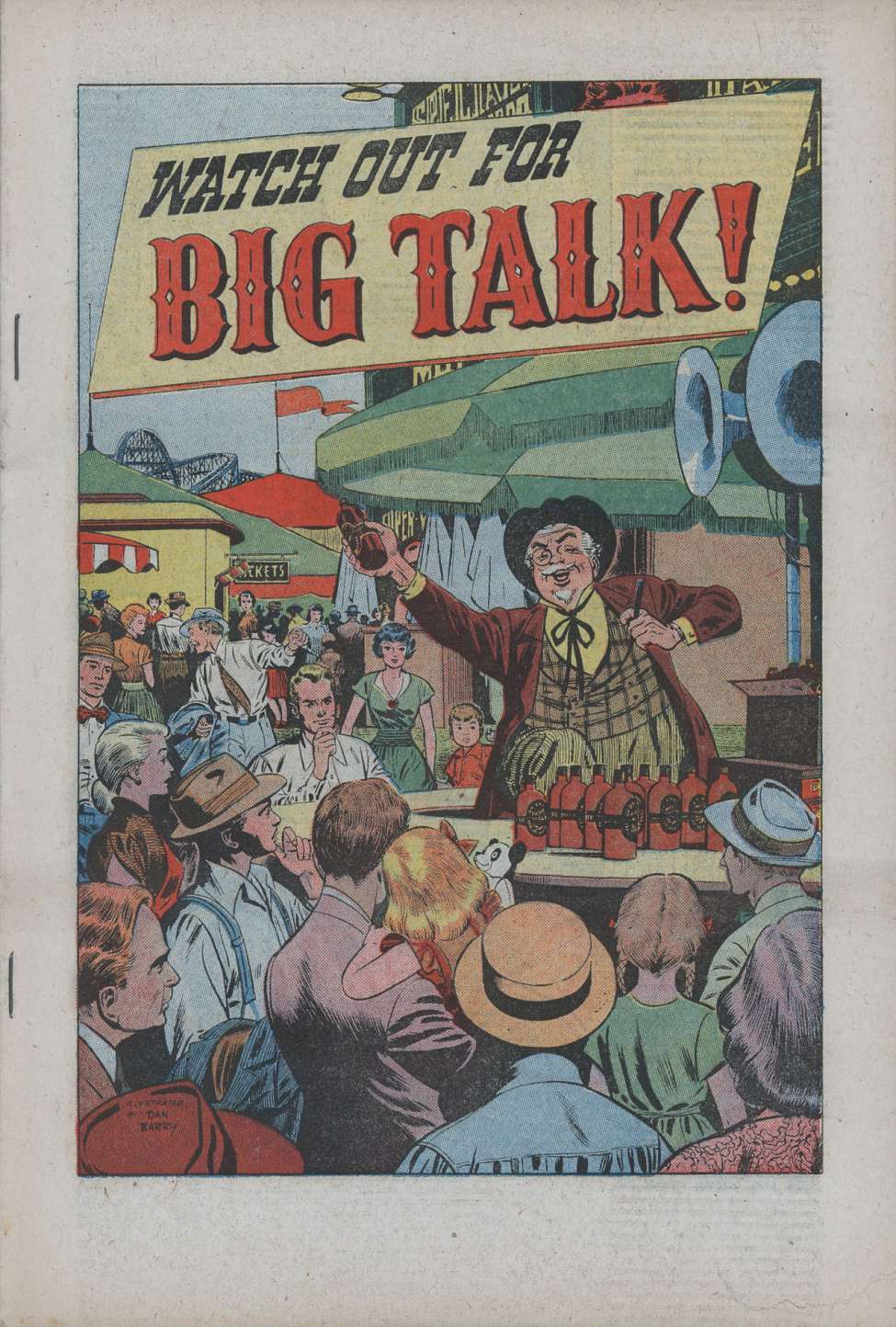
Although Sligh never states it as such, this course he is referring to is no doubt part of the massive propaganda campaign to counter a labor-focused or union narrative. The main entity behind the pro-business propaganda campaign was none other than the National Association of Manufacturers, the very same entity that Sligh had become president of in 1952. This campaign included not only courses used in factories, but curriculum that found its way into the K-12 education system along with a massive branding campaign. NAM even created a comic book (shown here) that advised students to be skeptical of union promises of cradle to grave security. (see Elizabeth Fones-Wolf, Selling Free Enterprise: The Business Assault on Labor and Liberalism)hqdefault

The anti-union sentiments reflected in the comments of Sligh’s speech are affirmed in several interviews that have been done with the furniture baron over the years.

In an interview conducted in 1982 through a project of Hope College, Sligh demonstrates his somewhat contemptuous attitude about workers. Speaking of workers he hired after starting the company in Holland, Michigan in 1933, Sligh states, “The people in the plant were getting only 35 cents an hour. But, they hadn’t worked for three years, so they were glad to get a job.”

In a 1988 interview with former Grand Rapids City Historian Gordon Olsen, Sligh openly shows his feelings about organized labor. In that interview, which is rather long, Sligh talks about how his workers voted to be a union in the late 1930s after “what happened with that strike in Flint (the 1936-37 wildcat strike).” He also  said, “in 1937 when Governor Murphy and President Roosevelt were doing everything they could to get everybody to join a union.” Such a statement isn’t based in fact. The federal and state governments weren’t really in favor of labor organizing, but there was so much militant union organizing in those days that Roosevelt and other politicians conceded to some of the demands of organized labor for fear that the country would erupt into a revolution if there wasn’t some form of compromise. (The CIO was aggressively organizing across the country, using militant strikes as the main tactic. See Jeremy Brecher’s book, Strike!)

In many ways, the arguments that Charles Sligh Jr. was using as the head of a furniture company or the President of NAM are not much different that the arguments that the capitalist class makes today about the need for Right to Work laws. One can see a clear lineage between the christian driven capitalism of Charles Sligh Jr. and the compassionate capitalism of Richard DeVos and realize that Grand Rapids has a long history of business people using religion to justify an economic system that has made them wealthy off the sweat of workers.

Posted in Anti-Capitalism/Labor | Tagged , , , , | Leave a comment

Grand Rapids Freedom Rider Walter Bergman

Bergman

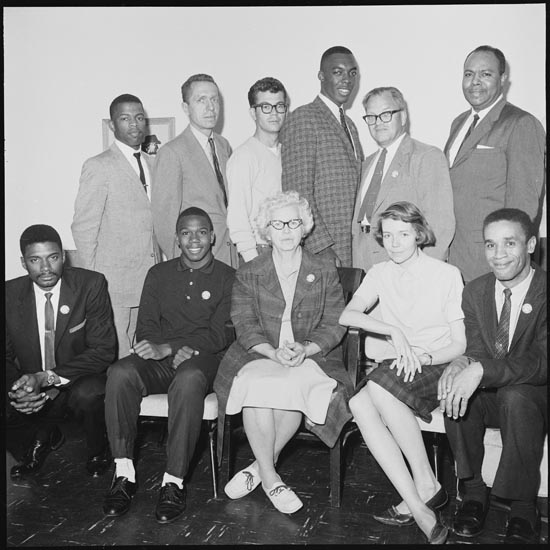
If one is serious about fighting institutionalized racism and white supremacy, then one must be prepared to take risks. This is exactly what Walter Bergman, a retired teacher had done in May of 1961, when he decided to be part of the first wave of Freedom Riders. (Bergman is the second from the right standing)

Freedom Riders was a project organized by the Congress of Racial Equality, known as CORE. The idea was to have black and white people ride buses in southern states to challenge the Jim Crow segregation policies that still plague much of the south.

Bergman, a long time teacher and education administrator in Detroit had seen plenty of racial injustice in his lifetime and had decided that he needed to take the next step and fight the white supremacist policies that were deeply entrenched in this country. Walter had retired in 1958 and began working with CORE on issues within the city, like picketing the international headquarters of the Kresge Corporation for their racists practices.

In February of 1961, CORE organized a conference in Kentucky, which Bergman attended. It was at this conference that CORE laid out their plans to have freedom riders challenge racist policies in the south. Even though Bergman was 61 at the time, he felt compelled to participate, so he and his wife signed up to be part of the first wave of Freedom Riders later that spring.

The Freedom Riders left Washington, DC on May 4th, 1961 and began their journey south. They encountered verbal abuse and opposition all along the way, but on May 14, after arriving at the Greyhound bus terminal in Anniston, Alabama, the freedom riders experienced physical violence.

Any angry group of white men had been waiting at the bus station and shortly after the bus pulled in to the terminal, the men began to attack the bus, breaking its windows and slashing tires, and then pursuing it until the driver was forced to stop because of flat tires several miles out of town.

burning bus

The mob of white supremacists had followed the bus out of town in a caravan of cars and when they saw that the bus had stopped due to several flat tires, they exited from their cars and began attacking the bus again. This time, someone threw an incendiary bombs on the bus, which caught on fire. Despite the flames, some of the white men entered the bus and began beating some of the riders, only to be forced off the bus by an undercover cop who confronted them at gunpoint.

Rev. Fred Shuttleworth, an organizer and leader within the Southern Christian Leadership Conference, sent an armed group to where the burning bus was outside of Anniston, to escort the freedom riders back to town. Some of the freedom riders went to the hospital to have their wounds tended to.

The second bus, the one that Bergman was one, was a Trailways bus. This bus arrived in Anniston about an hour after the Greyhound bus. When the bus pulled into the terminal, there were closed signs posted and the terminal looked empty, except for a few police officers at first. Eventually the police officers entered the bus and told us to change seats, meaning they wanted to use to sit with whites in the front and blacks in the back, as was the policy in many southern states.

The freedom riders didn’t move, but several white men who had been on the bus since Atlanta, stood up as if to comply, when in fact they began attacking the freedom riders, along with other white supremacists who had arrived at the bus station. It was discovered later that the white men who had been on the bus since Atlanta, were members of the KKK, who had planned to ride along and attack the freedom riders at an opportune time.

Bergman’s description of the attack can be read in the book, The Price of Dissent: Testimonies to Political repression in America. The attackers had hammers and clubs and began beating several of the riders, include CORE member Jim Peck and Walter Bergman. Bergman, was beaten pretty severely and was lying unconscious for a period of time. Raymond Arsenault, in his book, Freedom Riders, described what happened next: 

Although Walter Bergman’s motionless body blocked the aisle, several Klansmen managed to drag Person and Harris, both barely conscious, to the back of the bus, draping them over the passengers sitting in the backseat. A few seconds later, they did the same thing with Peck and Bergman, creating a pile of bleeding and bruised humanity. Content with their brutal handiwork, the Klansmen then sat down in the middle of the bus to block any further attempts to violate the color line. A black woman riding as a regular passenger begged to be let off the bus, but the Klansmen forced her to stay. “Shut up, you black bitch,” one of them snarled. “Ain’t nobody but whites sitting up here. And them nigger lovers can just sit back there with their nigger friends.”

It is important to note at this point, that the whole time the white supremacist had been beating the freedom riders, that the cops who were standing just outside the bus did nothing.Screen Shot 2016-02-21 at 6.04.44 AM

Eventually the white men stopped attacking the riders and allowed the bus to leave the terminal and make its way to the Birmingham. When the bus arrived in Birmingham, there was another group of white supremacists waiting to meet them. Again, these white men boarded the bus and began beating the freedom riders, both black and white. The white supremacists also used the opportunity to attack black people who just happened to be at the bus terminal waiting to depart for a different destination.

Bergman then talked about how he was then helping Peck, who was bleeding badly, and trying to get him to a hospital. Bergman was able to flag a taxi and got Peck to a hospital, where they stitched him up. However, the hospital staff told them to leave because, “It wouldn’t be safe for them there.”220px-FreedomRiders2010Poster

The freedom riders were able to find safe haven in Rev. Shuttleworth’s church. People from the congregation had come to offer support and to hear testimony from the freedom riders. While people were meeting in the church, more white supremacists had gathered outside. Bergman says that people in the church just began singing and eventually the mob left.

The next day the freedom riders decided to take the next bus and head to Montgomery, which was the next stop on their route. The first Greyhound to arrive at the station refused to take the freedom riders, as did the next and the next. After some deliberation the group decided to just take a plane to their final destination, which was New Orleans. There was a caravan of cars to take them to the airport and Bergman recounted how the men driving their vehicles had open their hoods and crawled under the cars before starting their engines. When asked why they were doing this, they replied, “It is just standard operating procedure, to make sure there are no bombs on the car.”

The caravan took them to the airport, where another group of white supremacists were waiting for them. Undeterred, the freedom riders got on the plane, only to have to get off after just a few minutes because of a bomb threat that was reported. The flight was cancelled, along with the next one. Rev. Shuttlesworth had called the US Attorney General’s office and convinced Bobby Kennedy to send a plane to Birmingham that would eventually take the group to New Orleans.

About a week after the attacks, Walter Bergman had a stroke, brought on by the blows to the head. The severity of the stroke left Bergman disabled, forcing him to use a wheel chair for the rest of his life.Walter

I met Walter Bergman in the early 1980s while while protesting US military intervention in Central America. Walter was a regular at the weekly protests held in downtown Grand Rapids. I got to know Walter even better when I was co-editing a newspaper and would deliver his copy to the retirement home he and his wife were living at in the northwest part of Grand Rapids. Walter would always invite me in and want to talk about current politics. He would always ask me what I was reading and said that it was our duty to constantly be learning and figuring out ways to be part of the struggle for justice.

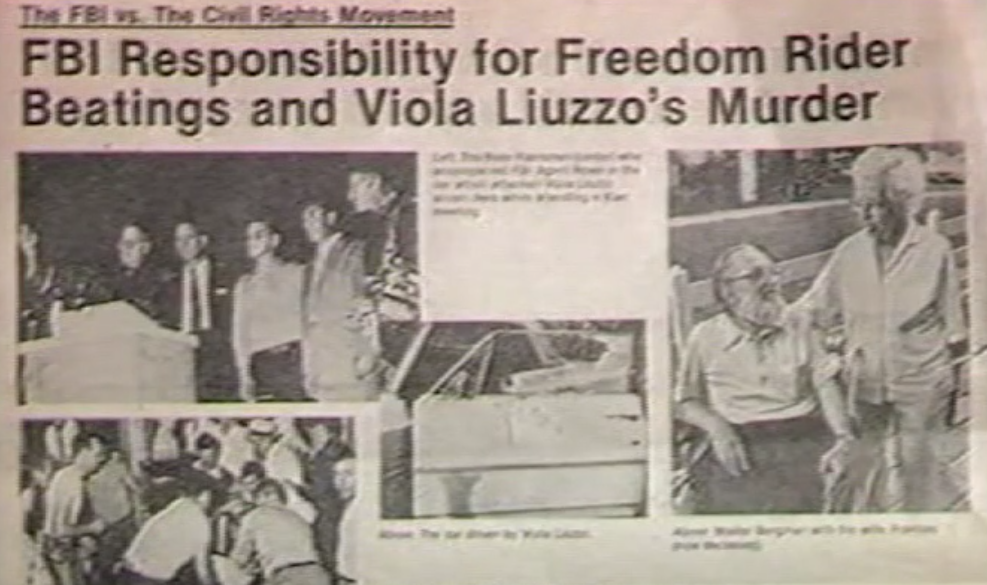
With the help of the ACLU, Bergman and his wife and filed a lawsuit against the federal government in 1977, on the grounds that they believed that the FBI was complicit in the attacks against Walter. After years of litigation and investigation, the courts decided in his favor and awarded him a settlement. The judge found the FBI to be guilty of wrong doing, since they knew about the plans by the KKK to attack the freedom riders, but did nothing to prevent them attacks from taking place.

Screen Shot 2016-02-21 at 6.04.11 AM

Walter Bergman continued to be active in social justice struggles and lived to be 100 years old. Walter passed away in 1999 and a memorial service was held for Walter at the Fountain Street Church.

Here is a 9 minute video that was produced some 20 years ago to honor the witness and commitment of Dr. Walter Bergman.

Posted in Civil Rights/Freedom Movement | Tagged , , | 2 Comments

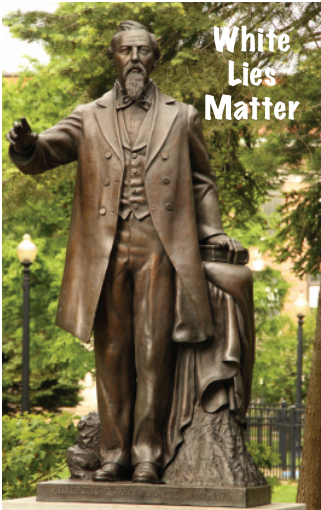
White Lies Matter: MLive, Holland and the celebration of Settler Colonialism

On Tuesday, February 9, MLive ran an article entitled, Dutch settlers founded Holland on this day in 1847Screen Shot 2016-02-09 at 4.52.43 PM

The article then says:

It was Feb. 9, 1847 when a small group of settlers led by Rev. Albertus C. Van Raalte built its first cabins nearly three months after the group’s ship, “The Southerner,” reached the New World in November of 1846.

Van Raalte spent five weeks traversing a 30-mile stretch between the mouths of the Grand and Kalamazoo Rivers in December of 1846, before eventually deciding upon 1,000 acres near the southeast corner of Black Lake (Lake Macatawa).

The rest of the MLive story goes on to talk about Van Raalte and provides a lengthy excerpt from then Michigan Gov. Epaphroditus Ransom, where the governor endorses the Dutch “colony,” which is the term the governor used in his remarks.

There are two things that are astounding about this story. First, there is no mention of the Anishinaabe that were living on the land that Van Raalte and his fellow believers had decided would be theirs.

Second, the article is an example of how the dominant narrative about Euro-American settlement in what is now the United States. People came to the New World, (which is how the MLive article described it) settled on land that was seemingly vacant and founded a community without ever mentioning the existence of Native people. In other words, what the MLive article does is to continue the long tradition of Manifest Destiny, which for Native people is just code for Settler Colonialism.

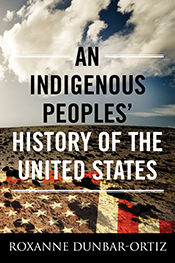
Native scholar Roxanne Dunbar-Ortiz describes Settler Colonialism in her bookAn Indigenous Peoples’ History of the United States as such:

“Settler colonialism has best been defined as more of an imposed structure than an historical event. This structure is characterized by relationships of domination and subjugation that become woven throughout the fabric of society, and even becomes disguised as paternalistic benevolence. The objective of settler colonialism is always the acquisition of indigenous territories and resources, which means the native must be eliminated. This can be accomplished in overt ways including biological warfare and military domination but also in more subtle ways; for example, through national policies of assimilation.”indigenous-history

In looking at other sources on Van Raalte, I was hard pressed to find much about his group’s decision to occupy land at what is now Holland. One source paints Van Raalte and his followers as having to endure all kinds of hardship, but again, there is no mention of indigenous people.

Returning to his followers, he reached these parts again with a devoted band of pioneers, marching single file along Indian trails, on the 9th ofFebruary, 1847. It is impossible to describe in this brief sketch the deadly struggle waged by the pioneers with the forest tangles and wild animals; with inadequate food and insufficient shelter; with summer heat and winter cold; with the malarial effluvia of the swampy forests, and the resulting decimating diseases; with homesickness and despondency, with detractions and evil reports,and all manner of discouragement. With God’s help they persisted and prevailed. Dr. Van Raalte was the head and heart of the enterprise, and his death, in the early years of the history of the Colonies, would have precipitated the whole desperate undertaking of the inexperienced and poverty-stricken settlers in hopeless ruin and confusion. 

In another source the writer states that Van Raalte, “expected to find their promised land, but instead found an insect-infested swamp and dense forest.” Again, no mention of indigenous people.

In yet another source, the writer states, On Feb. 9, 1847, Van Raalte and six people of his party arrived at the Old Wing Mission, located in northern Allegan County’s Fillmore Township, to begin the Herculean task of transforming the wilderness into a thriving “city set on a hill.” Once again, no mention of indigenous people. 

There are lots of references to Van Raalte and the fact that he founded Hope College and his community had joined the Reformed Church in America (RCA), but one is hard pressed to find any reference to indigenous people living in the area of what became Holland, Michigan. The lack of any reference to indigenous people on the so-called founding of Holland only solidifies how entrenched the values of Settler Colonialism are here in West Michigan, in both commercial media and the dominant culture.

Posted in Lies Across Grand Rapids | Tagged , , | Leave a comment

What lack of faith in the government can lead to: Some personal reflections on the Kent County Militia (1995)

This article is re-printed from The FUNdamentalist, November 1995. The writer of this article attended weekly meetings of the Kent County Militia just months after the Oklahoma City bombing. 

Before I share my thoughts on who the local militia is, I feel it is important to note what resources I have been reading on the militia movement and the related movements within the country. This does not mean that I equate the Kent County Militia with any of the other movements or even any other militias, rather, I believe, it is important to have an understanding of these reactionary movements within the country in order to put into context the one that I have come to know personally.bk05p

There have been numerous journals that have dealt with the militia phenomenon and more recently several books. The most notable journals have been The Nation, The Progressive, Klan Watch, Covert Action Quarterly, and Z Magazine. Some of these publications have dealt honestly with the militia movement, others have not. The seasoned reporters and researchers of reactionary, or what is referred to as right-wing movements, have done the best job to date in my opinion, specifically Chip Berlet and Sara Diamond. Both have been following these movements for years and have keen insight into the sociological nature of such movements. Sara Diamond recently published Roads to Dominion: Right-Wing Movements and Political Power in the United States, a very thorough investigation of reactionary movements since 1945g. Chip Berlet has two books coming out before the end of the year. In a recent interview in Z Magazine, Berlet talked about how many of the recent militia recruits were victims of the global economic restructuring, especially farmers. Many of these disenfranchised workers were directly target by reactionary movements in part because of their general disdain for government, but also because of their particular ideological view of the world. Both Berlet and Diamond agree that people have gravitated towards the militia movement in part because of the failure of the progressive or left movements to reach out to rural and working class people who have been devastated by the “new world order.” Diamond, who has been following the Christian Right for over a decade, also suggests that people should not simply dismiss the militia movement. She believes that, like the Christian Right, much can be learned from these movements about the larger, more systemic reactionary elements within our society. But she also believes that they should not be quickly dismissed, since many of these people are just like you and me.

Every Friday night from 6:30 to 7:00 people wander in to a meeting room that is adjacent to the local John Birch Society book store at 1369 Plainfield Ave. People mingle and usually talk about the latest on the Waco hearings, the Oklahoma bombing, or current draconian measures proposed at the State and Federal level. Some of the men are dressed in military fatigues, but most people look like they just finished the evening meal or a long day at work. The meeting is called to order by reciting the Pledge of Allegiance to the Flag. There is clearly a hierarchy involved with “ranking officers” sitting up front and facilitating the discussion. In some ways their ideas reflect a paranoid and conspiratorial view of the world and at the same time, I could not help but find myself nodding in agreement with many things that were put on the table.Screen Shot 2016-02-02 at 3.50.42 PM

The discussions are always very lively and are usually accompanied by stacks of literature, copies of audio lectures, or recently produced videos that are circulating the country. Everyone is invited to participate and I have heard at least one guest speaker. People speak very personally about how they have lost faith in the system or how they have been direct victims of “unconstitutional behavior” while serving in the USA military. People are encouraged to “think for themselves since much of what they read, hear, and see in the media are lies.” Towards the end of each meeting current legislation is discussed and letter writing usually ensues. A few members surf the Internet and print out relevant material so that members can have the full text or summaries of legislation up for discussion. This was one method they employed that impressed me even though it seems contrary to the general public’s perception. Why would a movement that “advocates” violence work within the system? One of the local militia officers said that this, in addition to education, is “how we have to change things. We can change things through the courts, the guns and training are a last ditch resort. We can change things without firing a shot.” They also talked about how they want to avoid being viewed as an extremist organization. They have adopted part of the US 131 highway to help boost their image. They also feel that producing a show on GRTV would help with their image, because then people could hear for themselves what it is that the militia is saying.

The group’s fundamental belief is that we need to get back to what the founding fathers had intended in the constitution. They believe that next to the Christian Bible, the constitution is the supreme text for governing society. Some of them so firmly believe in the wisdom of the constitution’s framers that they said “if there ever was a super race on this earth it was the founding fathers.” This country, they believe, went astray in part due to the federal reserve system that was implemented around the turn of the century, but most definitely after World War II. Promoting the United Nations is at the core of their conspiracy theory. They believe that the United Nations is already engaged in taking over the sovereignty of the United States. This is demonstrated by the fact that at a United States military base in Fort Bragg, the only flag in the main office is a United Nations flag, not a United States one. I would agree that there are forces that are eroding this nation’s sovereignty, but it is certainly not the United Nations. I would suggest that anyone questioning this should read recent books by Noam Chomsky that clearly document the opposite. That the United Nations has tended to be a lackey of United States policy or ineffectual when the United States has voted against a majority United Nations position.

Another source of contention for the militia is what has happened to Gulf War veterans. This Gulf War Syndrome, they believe, was a biological experiment conducted by the Pentagon on United States soldiers without their knowledge. Here, I can agree with their analysis. In fact, we have shared resources to confirm that position. Several of their members were delighted with an article I gave them from a back issue of Covert Action Quarterly. They believe that this disease, the AIDS virus, and the Ebola virus all have some connection and that to me is not out of the realm of possibility. One of the local higher ranking officers is even trying to convene a state-wide convention just to talk about these viruses.

There also seems to be a nativist element to their ideology. They would like to see states have more autonomy from the federal government, counties more independent from the state, and common law courts revived. They are certainly opposed to big government and an intrusive government. No surprise that they would be actively opposed to any gun restriction legislation and even more up in arms over the so-called anti-terrorist legislation. Here researchers like Berlet caution us to be very careful at how the FBI and other federal agencies deal with the militia. He cautions us on how the FBI might use militias to further erode our civil rights. Clearly that is what the anti-terrorism legislation is all about. For the militias that was the purpose of the Oklahoma City Federal Building bombing.

They believe that the Federal government was responsible for the bombing. This would cause a smokescreen to repress or scapegoat the militia or any other anti-government reactionary groups. While I am not convinced as to who did the bombing, I do not dismiss this as out of the realm of possibility. Anyone who does so has not familiarized themselves with United States history. What is important here is that we don’t use any conspiracy theories to demonize any group. There are two kinds of populist movements, a progressive participatory populism and a reactionary, scapegoating populism. I would rather be with the former. Progressive populism doesn’t see things as conspiracies, rather they tend to critique things in a structural way that says that an ongoing repression and exploitation is business as usual in the present system, not some conspiracy of people sitting around plotting global takeover. Progressive populism also does not blame or scapegoat other people who are also victims of this system; immigrants, inner city dwellers, women, gays and lesbians, or Jews. In this case the local militia has taken a negative view on immigrants for sure, stating that we should close our borders. They have not expressed any racial superiority of the Klan fashion, yet all members are White and tend to be Christian.

It is not clear to me if the group as a whole embraces the Judeo-Christian writings as a sacred text. Certainly the majority does, but not in a theologically orthodox way. They believe that this nation was founded on Christian principles and that those principles should govern society. When discussing the evolutionary theory, one member said, “I’d like to see Darwin part the Red Sea.” To many of them, evolution, abortion, gay life, and the “public fool system” are all part of the “new world order.” But the religious element still seems overshadowed by their desire to fight for basic constitutional rights.

As an organizing tactic, one night one member said that we need to get to know our neighbors, go door to door, and find out if people believe in their right to bear arms. They believe that much of the public would be behind them if there was not this misconception of who they are. Over and over again they stress the need to educate themselves and then others. The resources that keep springing up the most are materials on the Internet, Bill Cooper’s radio talk show, The New American journal, Veritas newspaper, The Spotlight, Reader’s Digest, the Chuck Carter Show, G. Gordon Liddy’s program, and the Washington Times. Certainly these are reactionary publications by and large, but they also base their actions on the state and federal constitutions, copies of which can always be obtained at meetings. Most meetings consist of 30 to 50 people, and that is just on a Friday night. They meet other days for those interested in the TV show and semi-regularly for training.

I have been impressed with many of the members’ commitment, diligence, openness, and frankness with which they confront the present state of affairs. I may not agree with much of their analysis, but I respect their desire to work for change. Certainly one must always be cautious of populist movements that are reactionary, often this is what can lead to a fascist movement’s rise to power. There is always a danger in naively accepting any group’s political position, but at the same time, it is essential that there be a healthy exchange between groups for clarity and most importantly for the opportunity to find some common ground. If we allow factionalism, sectarianism, and intolerance to govern our motives, then there can be no hope for a healthy, dynamic, and pluralistic society. I would encourage people to attend their meetings to see for yourself. No one can say they know what these people believe unless you engage directly with them. I also feel it would be beneficial to hold some sort of public forum to discuss diverging opinions on the present state of affairs, with the hope of challenging each other’s fundamental beliefs. I do not know if there can be any common ground between the militia and progressive movements in this community, but to fail to promote the possibility could be disastrous. If we are to overcome our own prejudices and others’, to say nothing of the structural ones, then we cannot remain isolationist. Isolationism is the breeding ground of all kinds of phobia.

Posted in Indy Media | Tagged , , | 2 Comments