Artwork highlights a People’s History in Grand Rapids – Print #15: Honoring the First Earth Day Action in Grand Rapids

Last semester, art students in Brett Colley’s GVSU class on printmaking, invited me to come talk about the Grand Rapids People’s History Project. The intent of the class was to have students investigate their own part of a People’s History of Grand Rapids and then make a print based upon an individual social movement or a particular moment in Grand Rapids history.

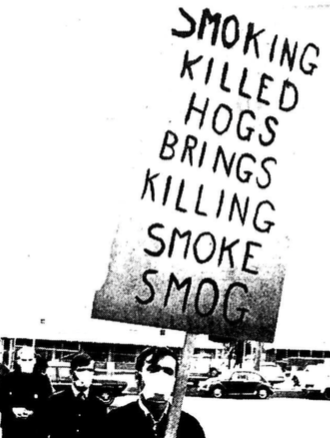
This print is by Joey Parks and depicts an action taken by students in Grand Rapids in 1970, during the first Earth Day

Students, from the then Grand Rapids Junior College:

“chose to protest at a meat factory, because of the pollution the business was emitting as a result of how the company cured the meat. The factory had been the target of complaints from neighbors for years because of the pollution.

The owner of the business was cited as saying that he was in the process of addressing the air pollution, but didn’t know what kind of timetable there would be to address the issue.”

Like most of the early Earth Day protests across the country, this student action chose to focus on the perpetrators of pollution, cruelty and ecological destruction.


Posted in Environmental Movement, People's History Artwork | Tagged , , | Leave a comment

Grand Rapids, Statues and White Supremacy

There has been a great deal of public conversation in the weeks following the White Supremacist violence in Charlottesville, around the issue of white supremacy and symbols of white supremacy.

In Charlotteville, the decision was made to remove a statue of Confederate General Robert E. Lee and now there are communities looking to take similar actions to remove statues that reflect White Supremacists leaders or values.

If Grand Rapids was to take inventory of statues that support white supremacy, what might we find?

Like most cities, there is no shortage of statues in Grand Rapids, most of which are to honor certain individuals or specific events in history. There have been several new statues added in recent years, based on a project that has been spearheaded by a member of the Grand Rapids Power Structure, Peter Secchia.

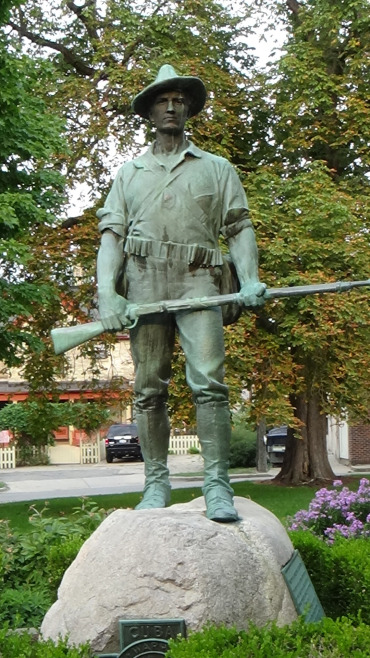
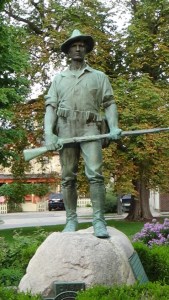
However, maybe a good place to start would be to look at the statue that resides in the little pocket park located at the intersection of Cherry, State and Madison streets. The statue is of a generic US soldier who fought in what is generally identified as the Spanish American Wars.

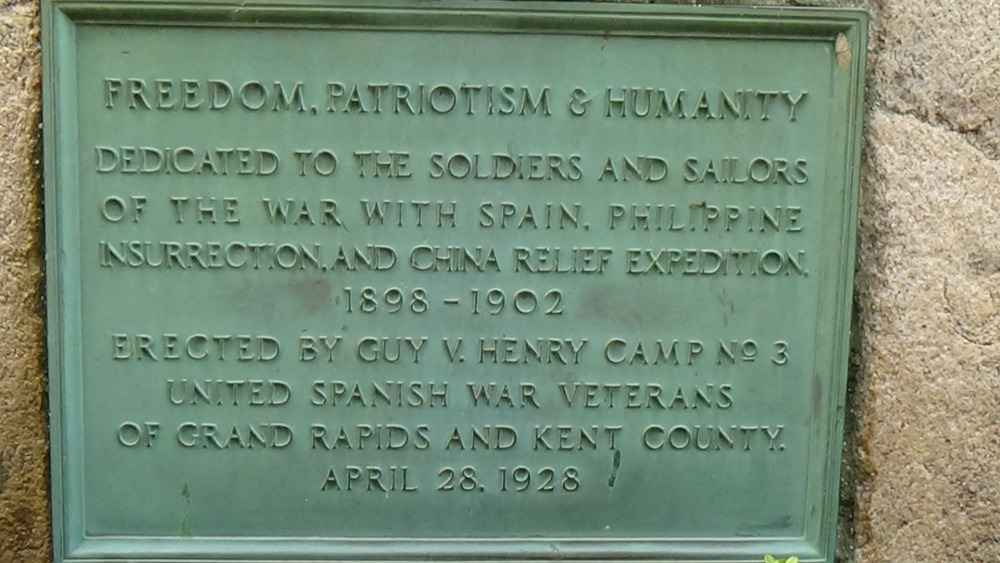
These wars began in 1898, and were for the purpose of US imperialist expansion, where the US militarily occupied Puerto Rico, Cuba and the Philippines. Here is what the plaque that accompanies the statue states:
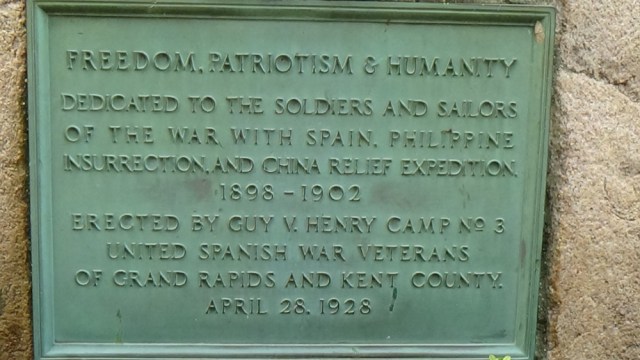
Despite the idealistic rhetoric on the plaque, the US engaged in racist military occupations that resulted in the murder of communities of color in each of those countries, with the most violence taking place in the Philippines, because of the insurrection that ensued to fight the US occupation.

According to Alfred McCoy’s book, Policing America’s Empire: The United States, the Philippines, and the Rise of the Surveillance State, the US killed 200,000 civilians in the Philippines. McCoy also cites a US General who commented:

It may be necessary to kill half of the Filipinos in order that the remaining half of the population may be advanced to a higher plane of life than their present semi-barbarous state affords.

In each case, the US military legacy has left a bloody path that continues to impact the Philippines, Cuba and Puerto Rico today.
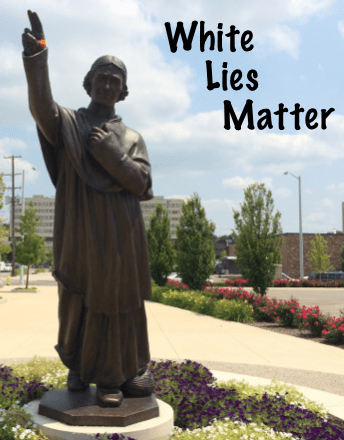
Another statue that should be considered for removal because it normalizes white supremacy, would be the statue that sits in Cathedral Square, by St. Andrews Catholic Church. The statue is that of Bishop Baraga and is part of the Community Legends project headed by Peter Secchia. 

Bishop Baraga is credited with bringing Catholicism to Grand Rapids, but his real work was in his efforts to convert the Ojibway people throughout what is now called Michigan. 

Baraga’s interaction with the Ojibway people also paved the way for genocidal policies that Europeans have implemented over the past 150 years in this area.

Those policies include the outright killing of Native people, stealing Native lands, forced relocation and taking Native children from their communities to put them in boarding schools, something the Catholic Church did in Michigan. The history of these boarding schools included denying Native children to speak their language, dress in traditional clothing, subjected to Christian teaching and also physical and sexual abuse, as is well documented in Kill the Indian, Save the Man: The Genocidal Impact of American Indian Residential Schools.

This is the legacy of Bishop Baraga, however well intentioned he was, since his commitment to converting the Ojibway paved the way for the harsh policies that followed.

Another statue to consider for removal is the statue in front of the Van Andel Arena that honors Amway co-founder, Jay Van Andel. Van Andel, like his Amway co-founder Rich deVos, funded numerous rightwing groups, both religious and secular. 

At the national level Van Andel funded the Heritage Foundation. They wrote the incoming Reagan administrations policy guide Mandate for Change that advocated the elimination of Food Stamps, Medicare, child nutritional assistance, farm assistance, legal services for the poor, and the repeal of a $1,000 tax exemption for the elderly. 

Jay Van Andel was deeply involved in the largest pro-business lobbying group in the country, the US Chamber of Commerce. In fact, Van Andel was Chairman of the national group for a period of time. The Chamber, which often likes to present itself as a defender of the small business owner, is one of the largest electoral contributors in the nation. According to Open Secrets, the US Chamber has spent $1.2 billion on lobbying since 1998. 
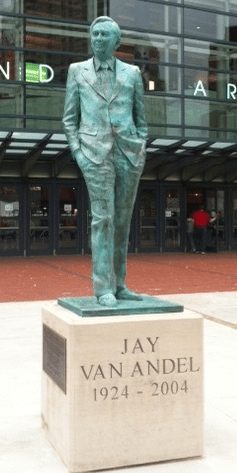
In addition, the US Chamber of Commerce has been one of the most consistent climate deniers in the country and has fought hard against any policy that supports working class people. The Chamber has opposed efforts to get paid sick leave policy passed and numerous other pro-worker policies. As Chairman of the US Chamber of Commerce, Van Andel made sure that whatever policies were being decided in Washington, they needed to benefit the capitalist class that he was a part of.

Maybe the least known of the groups that Van Andel was deeply involved with, was the National Endowment for Democracy, also known as NED. NED was created during the Reagan years as a mechanism to push neoliberal economic policies around the world and funding governments or political parties that would best serve the interest of the US. Allen Weinstein, who helped draft the legislation establishing NED, was quite candid when he said in 1991: “A lot of what we do today was done covertly 25 years ago by the CIA.” 

Jay Van Andel was on the Board of Directors of the National Endowment for Democracy and served in that capacity while the NED was funding death squad governments in Central America, funding opposition parties in Nicaragua and supporting pro-US dictatorships throughout Latin America, Africa and the Middle East.

These are just three examples of statues that could be removed from Grand Rapids, because of their endorsement of White Supremacist values. Many more could be, and should be, considered for removal. However, what is more important than removing statues, would be for the dismantling of institutions that promote and practice white supremacy in Grand Rapids.
Posted in Civil Rights/Freedom Movement, Lies Across Grand Rapids | Tagged , , , | Leave a comment

Artwork highlights a People’s History in Grand Rapids – Print #14: When the LGBT ordinance was defeated in Grand Rapids in 1991

EPSON MFP image

Last semester, art students in Brett Colley’s GVSU class on printmaking, invited me to come talk about the Grand Rapids People’s History Project. The intent of the class was to have students investigate their own part of a People’s History of Grand Rapids and then make a print based upon an individual social movement or a particular moment in Grand Rapids history.
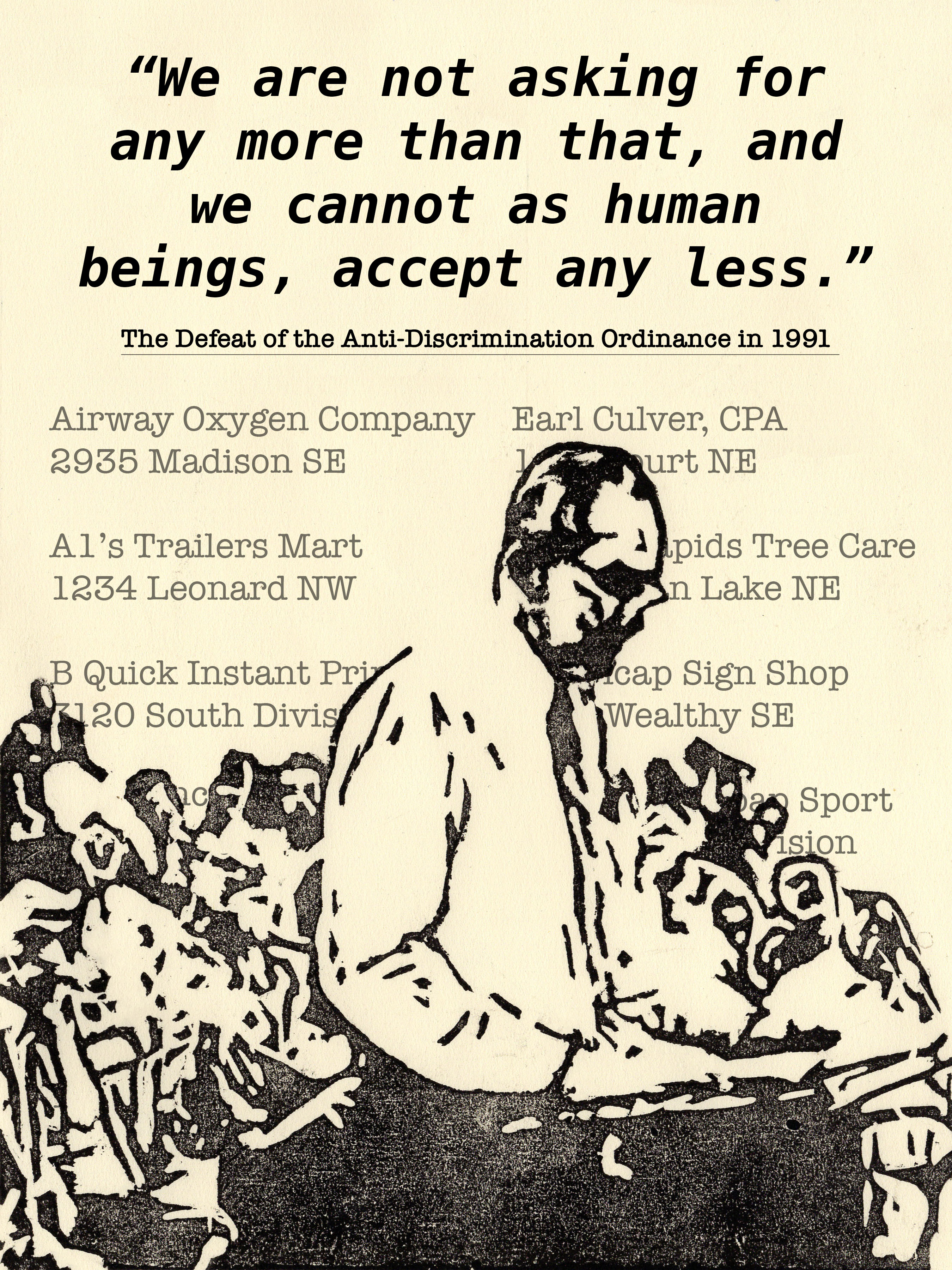
This print is by Alyssa Medina and it depicts two things about the history of the struggle for justice by the LGBTQ community in Grand Rapids in the early 1990s. First, the image that the artist uses is from a news clip about the 1991 Grand Rapids City Commission meeting, where members of the LGBTQ community were lobbying for an update in the anti-discrimination ordinance to include “sexual orientation.”

The other aspect of this print that makes it powerful, is its inclusion of names of some of the businesses at the time, which were publicly against the city ordinance campaign being organized by members of the LGBTQ community in Grand Rapids in the early 1990s. This list was put together by community members and published in The Network’s newsletter, which you can see here on the left.

The campaign to get the Grand Rapids City Commission to include the LGBTQ community in its anti-discrimination ordinance eventually passed in 1994.

EPSON MFP image

Posted in People's History Artwork | Tagged , , | Leave a comment

1888 Dummy Line Riot in Grand Rapids: Church members throw rocks and tear up rail lines

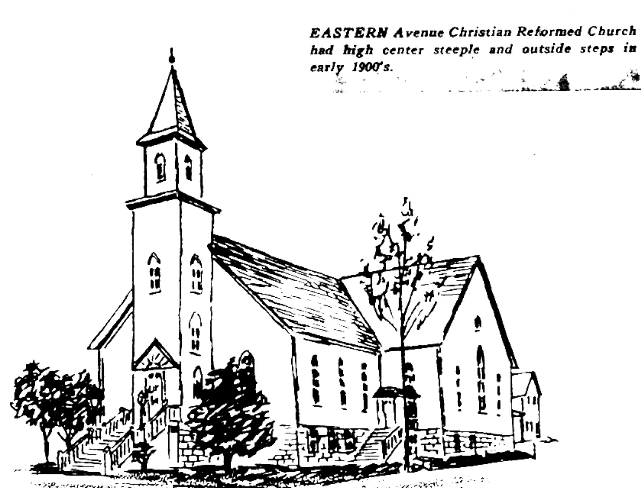
Dutch members of the Eastern Avenue Christian Reformed Church were considered pious people. The church members did more than just pray in 1888, when the Street Railway Company of Grand Rapids wanted to put a rail line along Eastern Avenue.

Fearing that the rail line would threaten the church’s ability to worship in peace, church members first petitioned the courts to stop the company from putting rail lines along Eastern Avenue.

This tactic did not work. Shortly after the court’s decision, the company began laying rail lines on Eastern Avenue near the church. Church members rang the bell to summon supporters to go out and greet the railway workers. Some church members tried to remove the rail lines, while others threw rocks at workers in an attempt to deter them from putting in the rail lines.

One source said that some of the church members were able to rip up rail lines and throw “pieces in the frog pond.” (Legendary Locals of Grand Rapids, 2012)

The police arrived by then to stop the church members from doing further damage. However, the very next day, the church bells rang again and this time about 1,000 people came to put a stop to the efforts of the Street Railway Company of Grand Rapids.

Again church members threw rocks and torn up rail lines faster than the workers could put them in. The GRPD showed up again to try to put a stop to the assault on the rail workers, even putting people in the paddy wagons. However, other church members were helping them to escape and avoid arrest.

A total of 3 blocks of tracks were ripped up that day, “some portions of it stand upon the ends of the ties, resembling a huge picket fence.” (from a retrospective piece that ran in the Grand Rapids Press in 1967)

A temporary injunction prevented the company from putting down any new rail lines that summer of 1888. The Kent County Circuit Court paid down a permanent injunction on December 23, 1889, giving the Eastern CRC members a victory.

Posted in Neighborhood organizing | Tagged , , | Leave a comment

Artwork highlights a People’s History in Grand Rapids – Print #13: The Klan in Grand Rapids 1925

Last semester, art students in Brett Colley’s GVSU class on printmaking, invited me to come talk about the Grand Rapids People’s History Project. The intent of the class was to have students investigate their own part of a People’s History of Grand Rapids and then make a print based upon an individual social movement or a particular moment in Grand Rapids history.

This print is by Alexis Nixon and focuses on the July 4, 1925 parade of 3,000 Klan members marching in a parade on the westside of Grand Rapids. The print is based on that march by the Klan in 1925 and the imagery reflects how the Klan hide behind the flag and the cross.

For a more detailed article on the history of the KKK in Grand Rapids, go to this link.

Posted in Civil Rights/Freedom Movement, People's History Artwork | Tagged , , , | Leave a comment

Students confront Richard DeVos at GVSC in 1977

One of our earliest posting here on the GR People’s History site, was a student critique of Amway co-founders Richard DeVos and Jay Van Andel by a Calvin College student in  1971. 

We recently came across another example of students confront Richard DeVos, which is documented in an alternative student newspaper at Grand Valley State College, a newspaper that existed in 1976 – 1977.

You can check out the alternative student newspaper, known as, The Insider. (Those who provided us with these digital copies were not sure if there were additional issues or not.) 

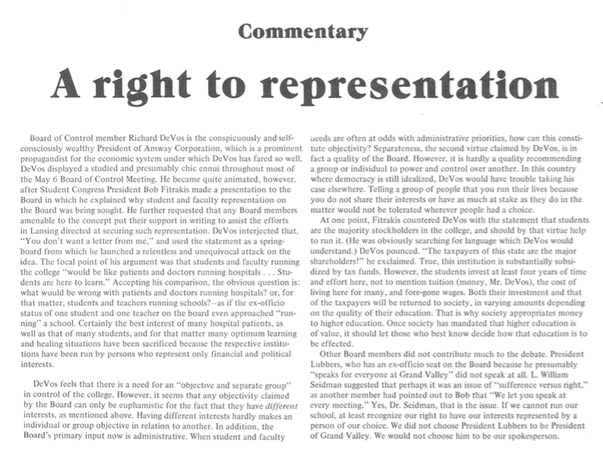
There is a commentary piece that appeared in the May 18, 1977 issue of The Insider, commentary that was responding to a May 6, 1977 Board of Control meeting. (The Board of Control was equivalent to the current Board of Trustees.) This commentary is based on the observations of a student who attended the Board of Control meeting and was directly responding to the comments from Richard DeVos.

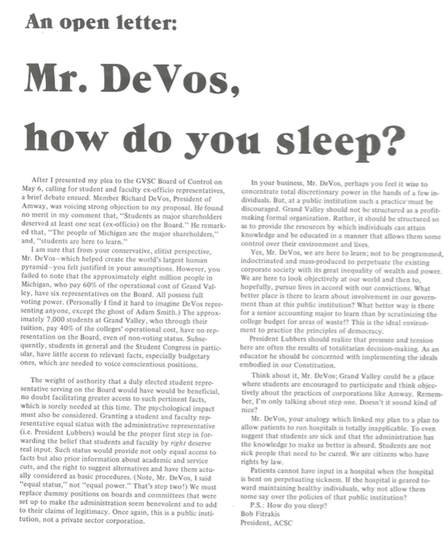
In addition, there was an Open Letter, written to Richard DeVos by the President of the All College Student Congress (ACSC), Bob Fritakis. Fritakis also takes issue with what Ricahrd DeVos has to say and makes it clear that students should have a seat on the Board of Control.

Posted in Indy Media | Tagged , , , | 7 Comments

Early Years of GRTV: An Interview with Tim Goodwin

We recently conducted an interview with Tim Goodwin about the founding and history of cable access channel GRTV in Grand Rapids.

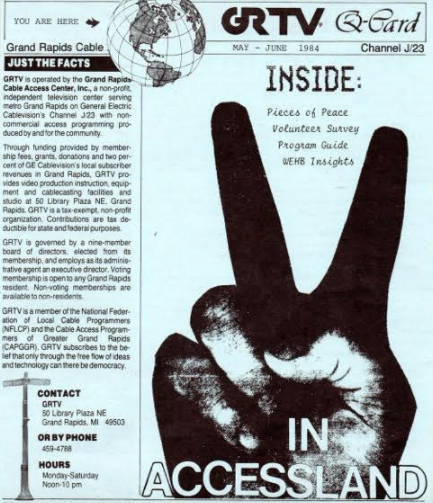
The interview is in 3 parts, but before each portion of the interview, we wanted to include some visual archives from the early GRTV newsletter.

Posted in Indy Media | Tagged , , , | Leave a comment

50 years after the 1967 Riot in Grand Rapids: What we know and what can we learn?

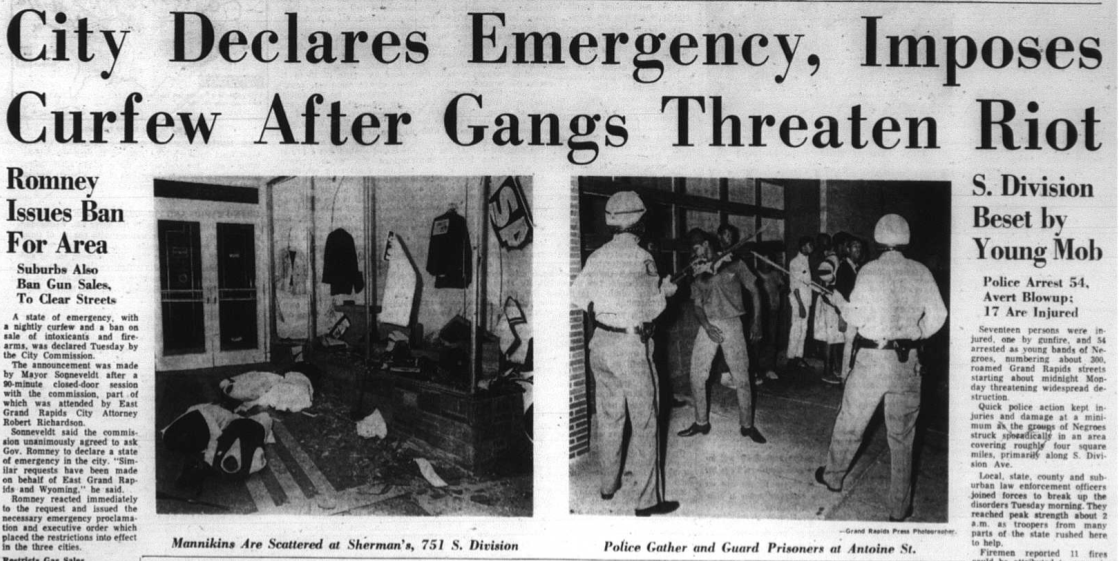
On July 25th, 1967, Grand Rapids police officers arrested several Black youth, when they pulled them over believing they were in a stolen vehicle. One source says that the officers may have used excessive force in dealing with the Black youth, according to an eyewitness account. This incident was the spark that led to the 3 day riot in Grand Rapids, which lasted from July 25th – 27th

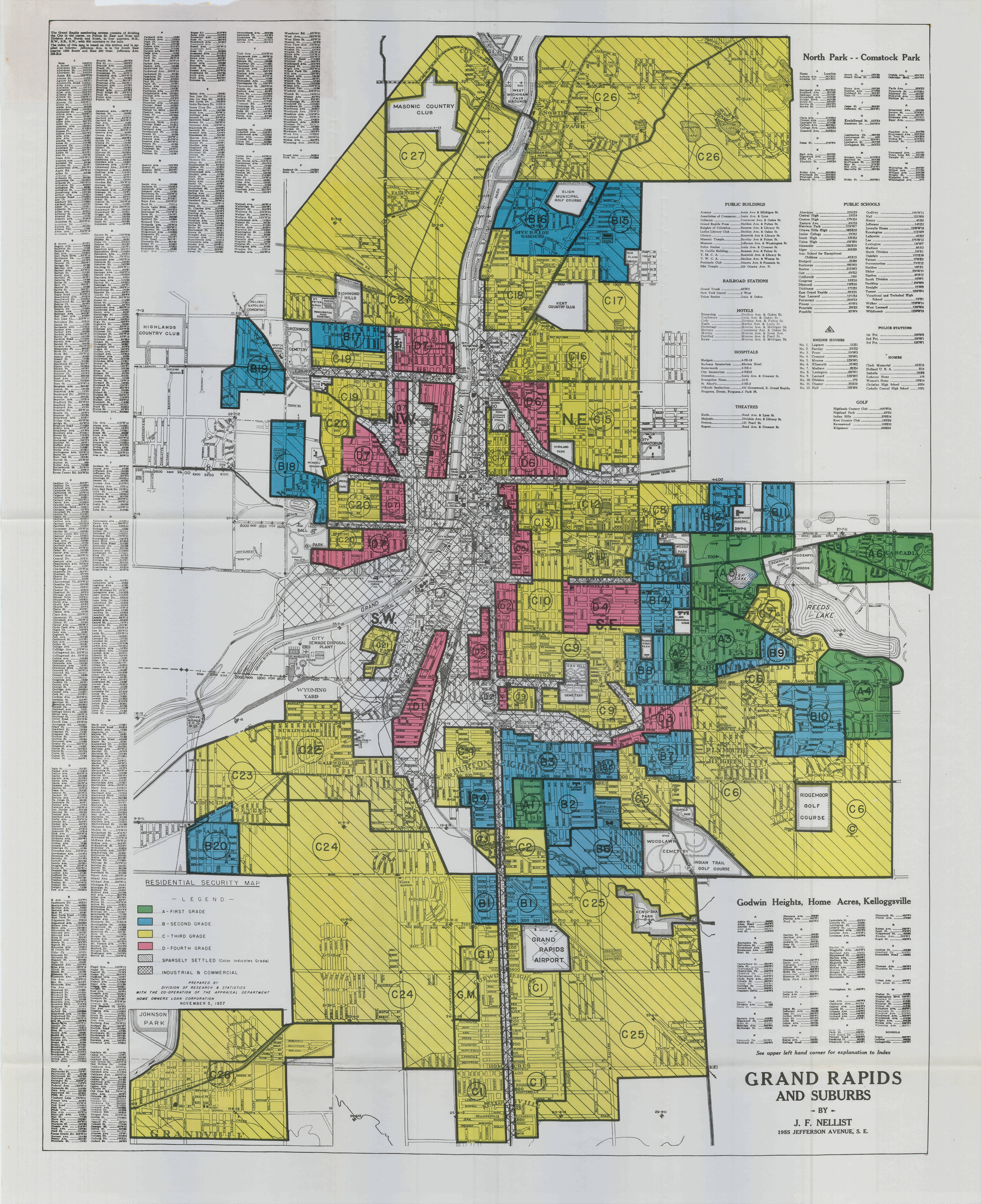
However, the riot did not occur in a vacuum. The African American community had been exploited and denied equality for decades in Grand Rapids. We know that housing segregation was systemic, with the financial red-lining of blacks and organized white resistance to blacks moving into their neighborhood. 

We know from reports conducted by the Grand Rapids chapter of the Urban League, that housing an unemployment conditions were appalling, based on reports from 1940 and 1947.

The civil rights movement in Grand Rapids responded to these forms of white supremacy and institutionalized racism in a variety of ways. We know that blacks organized a march a week after the racist church bombing in Birmingham, Alabama in 1963, that left four blacks girls dead. 

Black students were also resisting institutionalized racism and school segregation in the 1960s, which culminated in what was referred to as the Mustache Affair in 1966

Thus, the riot in the summer of 1967 was just waiting to happen, considering the harsh realities that the black community was facing in Grand Rapids.

We have looked at several aspects of the 1967 riot and encourage people to familiarize themselves with what happened and what we can all learn from the three-day riot.

We have written about the local news coverage of the 1967 riot. Here is a story we did 5 years ago, which looks specifically at how the Grand Rapids Press reported on the riot in 1967. 

We have also come across some channel 8 archival stories from the 1967 riot, with a posting of the video footage you can watch here that includes reporting from Detroit, which was rioting at the same time.

In addition, we posted another story about the how the channel 8 reporting centered white voices and white perspectives and ignored black voices and the black point of view. 

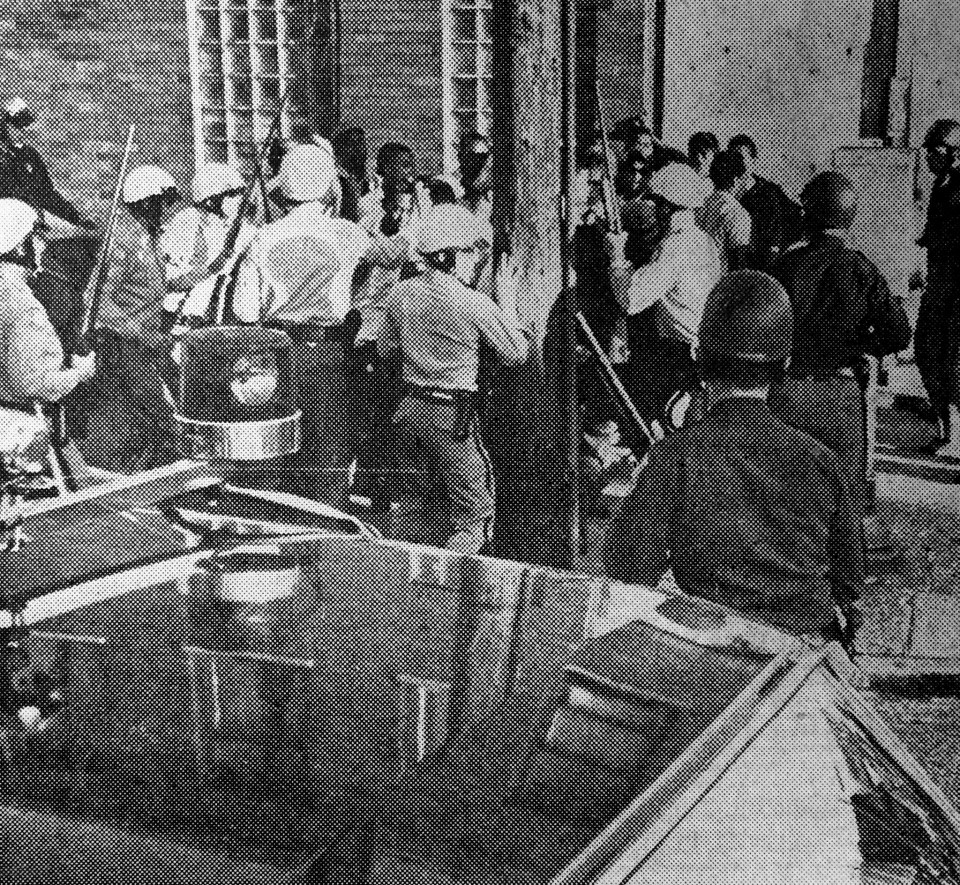
We also have a posting that looks at some of the archival photos from the 1967 riot, photos that were taken on behalf of the Grand Rapids Press. These photos tell a certain story from a certain perspective, what we call the White Gaze. 

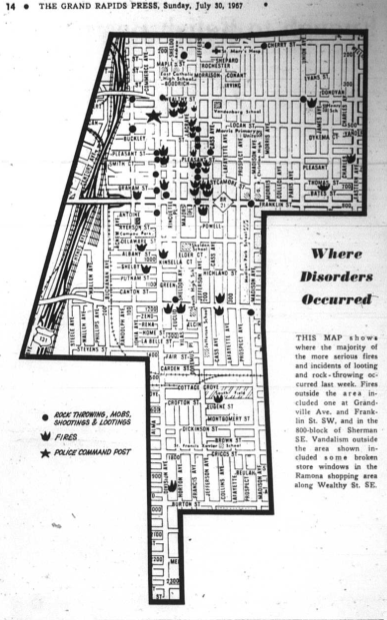
Several months after the 1967 riot, the Grand Rapids City government published a report called, Anatomy of a Riot. We posted an article that provided some analysis of the report by the City of Grand Rapids, which is very instructive, both in terms of the data and the recommendations that make up part of the report. 

One additional piece we wrote recently, was based upon an article that the Grand Rapids Press wrote 20 years after the riot. This article is based on the reflections of two men who were part of a federally funded task force, which used high school and college students to work in areas that were considered susceptible to rioting. The story from 1987 doesn’t provide much context for the 67 riot, but there are some useful points that are made by the two people that were interviewed. 

Again, we encourage people to become familiar with the history of the 1967 riot in Grand Rapids. The Grand Rapids African American Museum is hosting a photo exhibit at their downtown location and will hold an event at GVSU’s Grand Rapids campus on July 25.

In addition, it is important for all of us to learn from this history and to come to terms with the systemic racism and white supremacy that continues to be deeply entrenched in Grand Rapids. We need to ask ourselves what are the similarities between the conditions for African Americans in Grand Rapids in 1967 and 2017. Are the conditions really any better 50 years later?

Posted in Civil Rights/Freedom Movement | Tagged , | 3 Comments

WOOD TV 8 footage of the 1967 Riot in Grand Rapids

(Thanks to the Grand Rapids Public Library for directing me to this archival material.)

Last week, we posted a 1987 story from the Grand Rapids Press  about the 1967 riot in Grand Rapids, where two men who were part of a task force were interviewed about their memories of those three days in late July of 1967.

Today, we are posting footage from channel 8 that includes at the beginning a story done by reporters in Detroit during the 1967 riot in the Motor City, followed by footage with no commentary, an interview with the Grand Rapids Chief of Police and an interview with a Grand Rapids Business owner, whose store was attacked during the riot. The footage seems to go back to Detroit briefly, with the channel 8 reporter commenting, then followed again by footage in Grand Rapids without any commentary.

There is some footage of people who had been arrested, but no one who was arrested and no one from the Black community was interviewed about what started the three day riot nor what conditions the Black community were living under prior to the riot in late July of 1967. The video footage lasts a total of 11 minutes and 8 seconds and is a good indication of how the riot was reported on by commercial media at the time.

Posted in Civil Rights/Freedom Movement | Tagged , , | 2 Comments

A Retrospective on the 1967 Riot in Grand Rapids, Twenty Years Afterwards: From the Grand Rapids Press

(This is the first of a series of postings that deal with the 1967 riot in Grand Rapids, which took place 50 years ago between July 25 and July 27.)

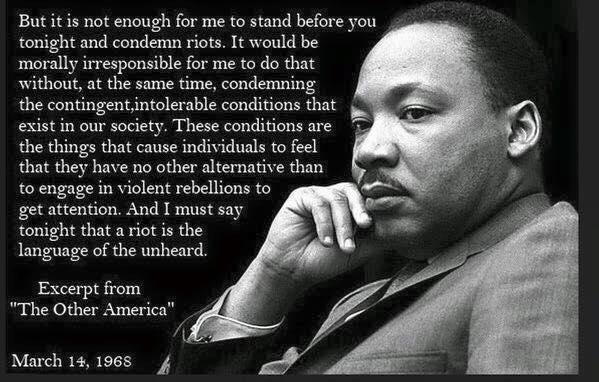
“It is not enough for me to stand before you tonight and condemn riots. It would be morally irresponsible for me to do that without, at the same time, condemning the contingent, intolerable conditions that exist in our society. These conditions are the things that cause individuals to feel that they have no other alternative than to engage in violent rebellions to get attention. And I must say tonight that a riot is the language of the unheard.”    Dr. Martin Luther King Jr.

In July of 1987, the Grand Rapids Press ran a story in their Flair section, 20-years after the 1967 Riot in Grand Rapids. 

The story features two men who spent the summer of 1967 working as part of a federally funded Task Force, the United Community Services Youth Program. The jobs of the young men who were hired were to attempt to resolve conflicts and keep things from getting out of hand. They worked out of the Franklin/Hall Complex.

The two men featured int he story, one white and one black, were Richard Donley and William Pritchett. They, along with the other young men who were part of the Task Force, were hired because they were athletes and had some size. Both Donley and Pritchett were very up front about this fact, saying they settled disagreements with “sheer size.”

The Flair Section article, in many ways, is an attempt to humanize what happened in 1967. However, the article does a great disservice to readers in that it doesn’t provide any real context from the reporter. For instance, early on in the article it states

Against a background of American cities exploding into violence all summer, Task Forces members headed for Grand Rapids streets.”

Such a statement doesn’t really reflect the dynamics of what happens during a riot. Just like the quote we began with from Dr. King, riots occur primarily as a form of protest. People are tired of the living conditions that they are subjected to and there is usually an incident that triggers the uprising. In the case of Grand Rapids, the riot was triggered by the GRPD pulling over a car of black youth and then used “excessive force” during the interaction. This is based on several eye witness accounts from neighbors who saw how the police treated the black youth. However, this was just the spark that set off the powder keg waiting to erupt. We know that for decades that African Americans living in Grand Rapids we experiencing high levels of poverty, unemployment and living in exploitative housing conditions, based on the research by the Grand Rapids Urban League conducted in 1940 and 1947. Indeed, the 1940 report states the following: 

There was one acknowledgement in the GR Press article from William Pritchett, that living conditions were a large part of why people rose up. Pritchett said, “Everybody wanted to get involved, it looked like, to show that they weren’t happy with what was going on, the way things were going.

However, citing only Pritchett and Donley (and one GRPD officer) makes it impossible to get any real sense of why people rose up when they did. We do know that people targeted absentee landlords and white-owned businesses, but since there is no one who was part of the uprising cited in the article it only reflects the perspective of those who were hired to prevent it from happening.

It would have been instructive for the Press reporter to do a follow up to a 1967 report put together by the City of Grand Rapids, entitled, Anatomy of a Riot. This report, while rather paternalistic, would have been useful in determining if the recommendations from the report were accomplished and if the conditions of African Americans living in the southeast part of Grand Rapids had improved or not between 1967 and 1987.

There were a few useful comments made in the 1987 Grand Rapids Press story. Some of those involved in the riot were signing the song Downtown, as a way of taunting the cops. Pritchett then said, “That’s where the city drew some real stern battle lines. If they come across Wealthy and Division, that corner there, then there’s going to be bloodshed. We’re not letting them get downtown under no circumstances. If they want to tear up the blocks between Hall Street and Wealthy…..

Another thing that the two men shared had to do with the fact that there was a curfew, not just in Grand Rapids, but in East Grand Rapids as well. “Blacks who had nothing to do with the rioting were afraid to travel through white areas to their jobs,” Pritchett recalls.

As we approach the 50th anniversary of the riot in Grand Rapids, it is important that we take a more honest look at what happened and what continues to happen in terms of the conditions that African Americans face in Grand Rapids.

Posted in Civil Rights/Freedom Movement | Tagged , | 3 Comments